
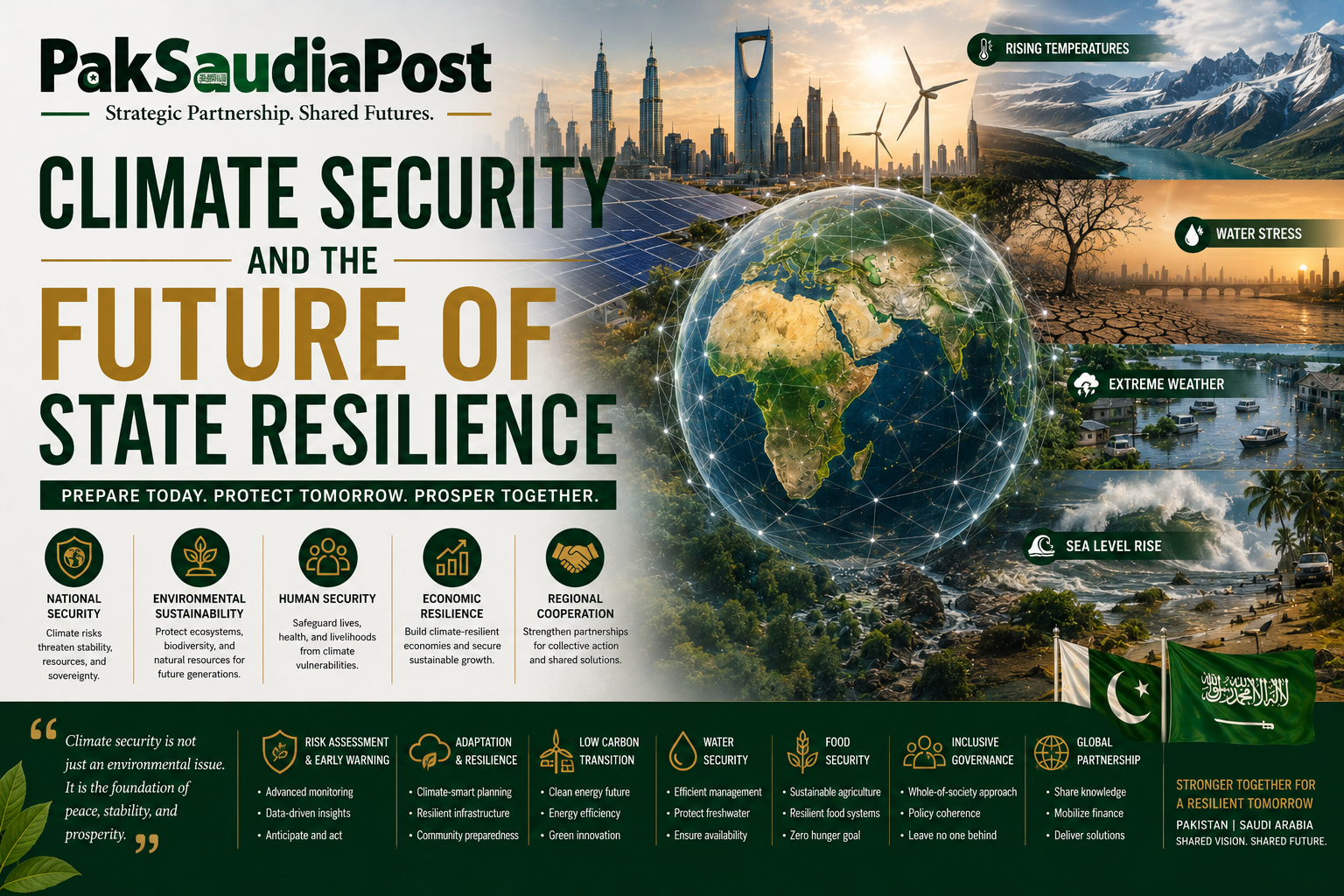
CLIMATE SECURITY AND THE FUTURE OF STATE RESILIENCE

Pakistan and Saudi Arabia are entering a period in which climate dynamics are no longer peripheral environmental stressors but central determinants of state stability, fiscal endurance, and long term governance capacity. The acceleration of heat intensity, water volatility, land degradation, and atmospheric unpredictability

CRITICAL INFRASTRUCTURE RESILIENCE AND SYSTEMIC SHOCK ABSORPTION STRATEGIES

Pakistan and Saudi Arabia are entering a phase in which the stability of state capacity is increasingly defined not by territorial control or conventional deterrence, but by the integrity of interconnected infrastructure systems that underpin modern governance. Energy transmission lines, undersea cables, satellite

Demographic Pressure Institutional Absorption Crisis

Across much of the developing world, demographic expansion is increasingly encountering a structural ceiling defined not by population size itself, but by the limited absorptive capacity of institutions tasked with translating human capital into economic productivity, social stability, and political coherence. This widening
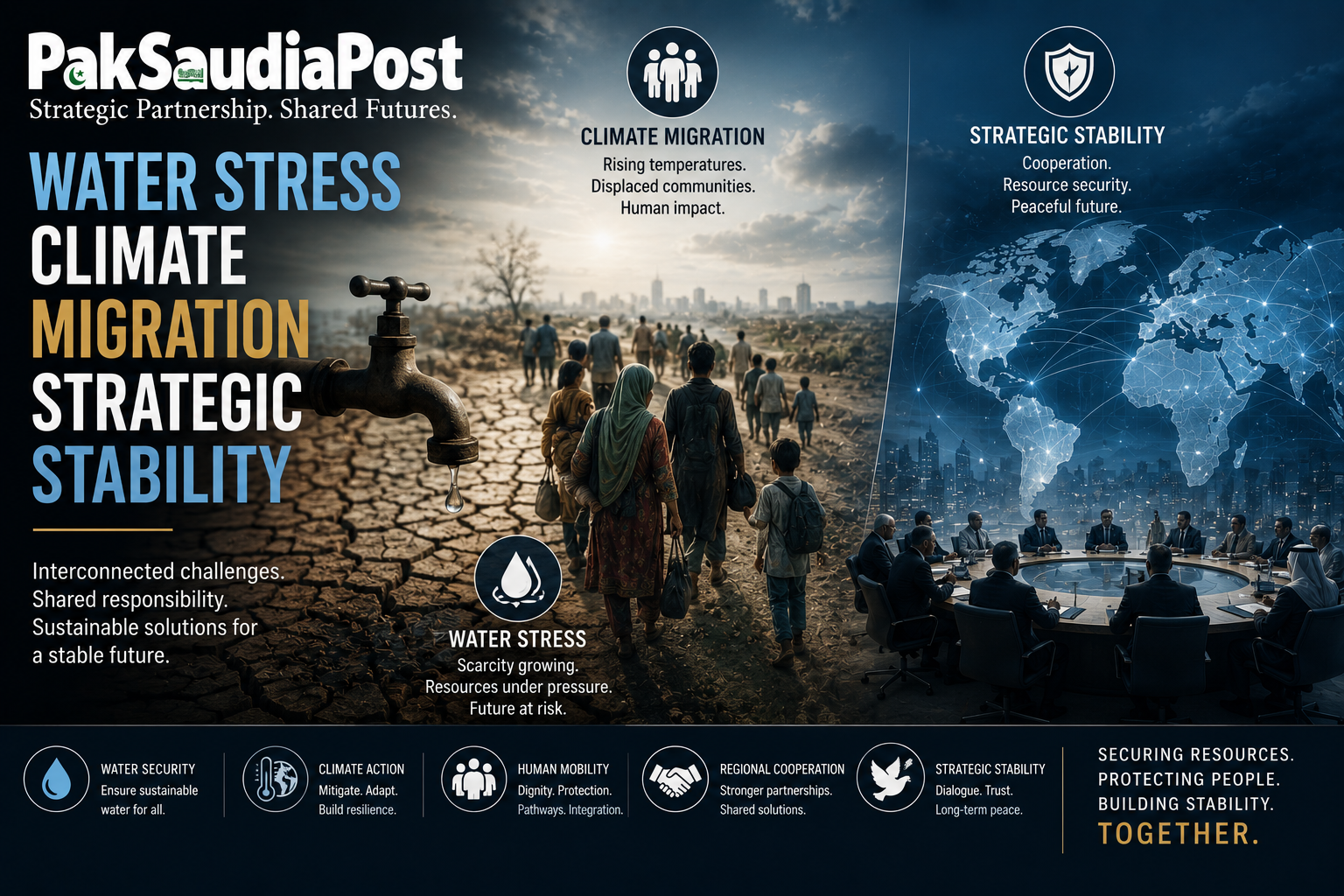
Water Stress Climate Migration Strategic Stability
Across South Asia, hydrological systems are entering a phase of structural volatility that is reshaping not only environmental governance but the deeper architecture of national security, economic planning, and demographic management. Water is no longer a stable background resource assumed within developmental planning;
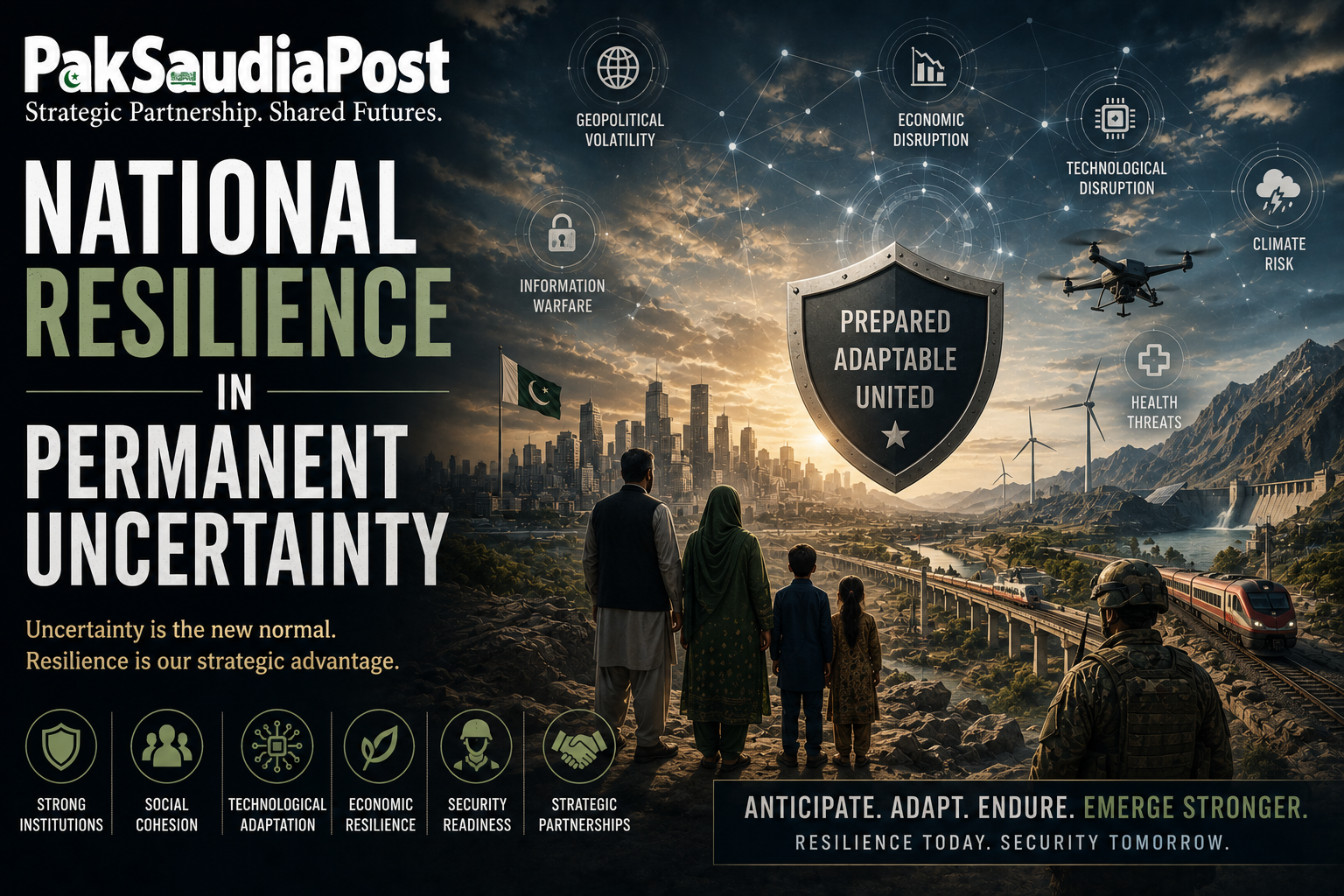
National Resilience in Permanent Uncertainty
Modern state systems are entering an operational environment in which uncertainty has ceased to be episodic and has instead become structurally continuous, altering the foundational assumptions of governance architecture, administrative predictability, and institutional legitimacy. Across multiple regions, but particularly within developing state ecosystems
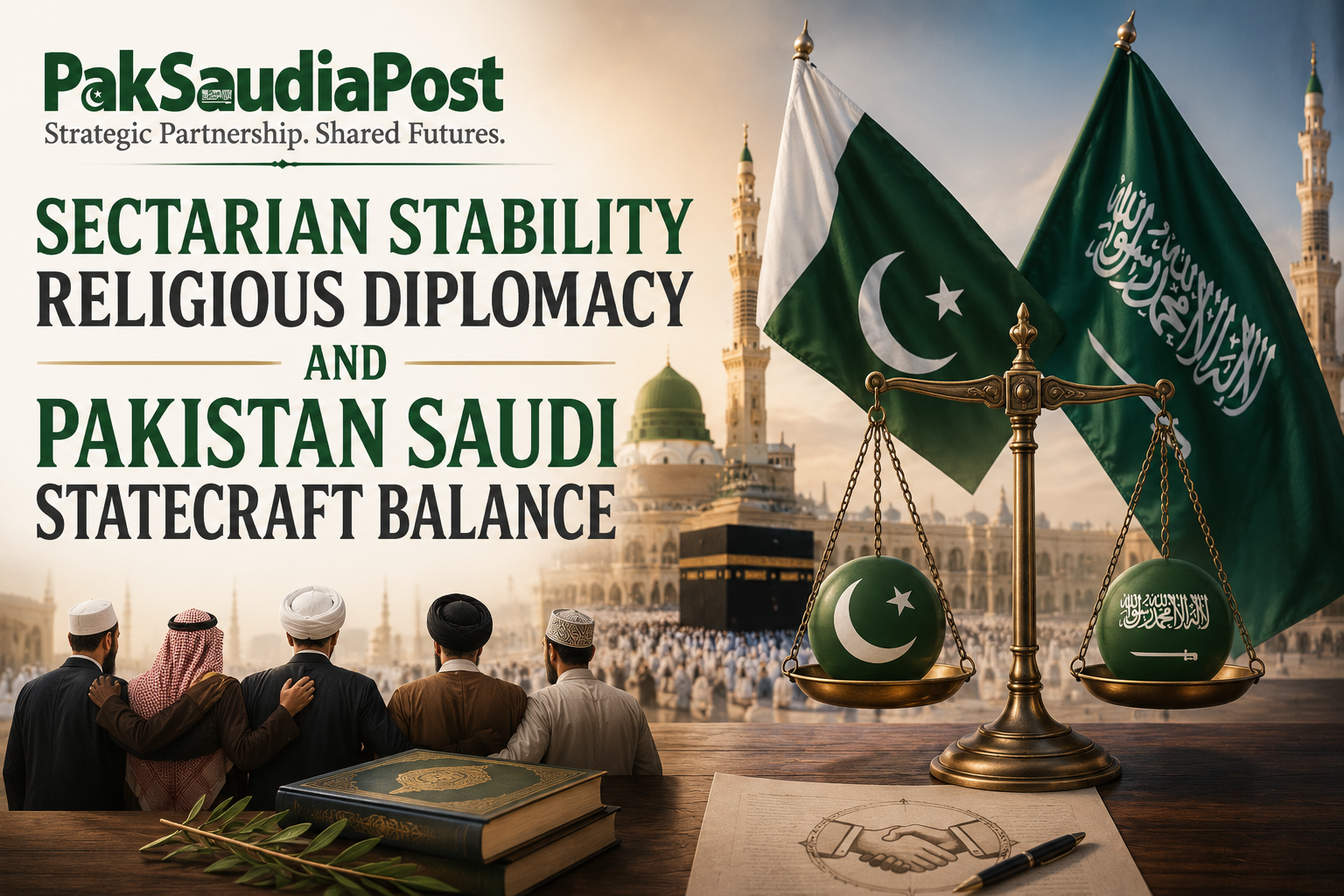
Sectarian Stability Religious Diplomacy and Pakistan Saudi Statecraft Balance
In the contemporary recalibration of Muslim world geopolitics, the relationship between Pakistan and Saudi Arabia occupies a uniquely sensitive intellectual and strategic space, one that is neither reducible to conventional alliance politics nor fully explainable through doctrinal affinity alone. It is instead a

Sectarian Stability Religious Diplomacy and Pakistan Saudi Statecraft Balance
In the contemporary recalibration of Muslim world geopolitics, the relationship between Pakistan and Saudi Arabia occupies a uniquely sensitive intellectual and strategic space, one that is neither reducible to conventional alliance politics nor fully explainable through doctrinal affinity alone. It is instead a

Water Scarcity Heat Stress Climate Security Pakistan Saudi Emergency

The accelerating convergence of water scarcity and heat stress across South Asia and the Arabian Peninsula is no longer a distant environmental concern but an active structural condition reshaping state capacity, economic planning, and regional diplomacy. In both Pakistan and Saudi Arabia, climate

Extremism Reputations and Reform Security Narratives Pakistan Saudi Alignment
The security relationship between Pakistan and Saudi Arabia has long been anchored in a pragmatic convergence of strategic needs, religious affinity, and regional threat perceptions. Yet beneath this surface stability lies a more complex and evolving terrain, where reputational politics, narrative reconstruction, and

Remittances at Risk Labor Nationalization Reshapes Pakistan Saudi Migration Flows
The political economy of Pakistan’s external sector has long rested on a paradox of dependence and resilience, where structural vulnerabilities in domestic employment have been offset by the outward migration of labour to the Gulf, particularly Saudi Arabia. For decades, this arrangement functioned