
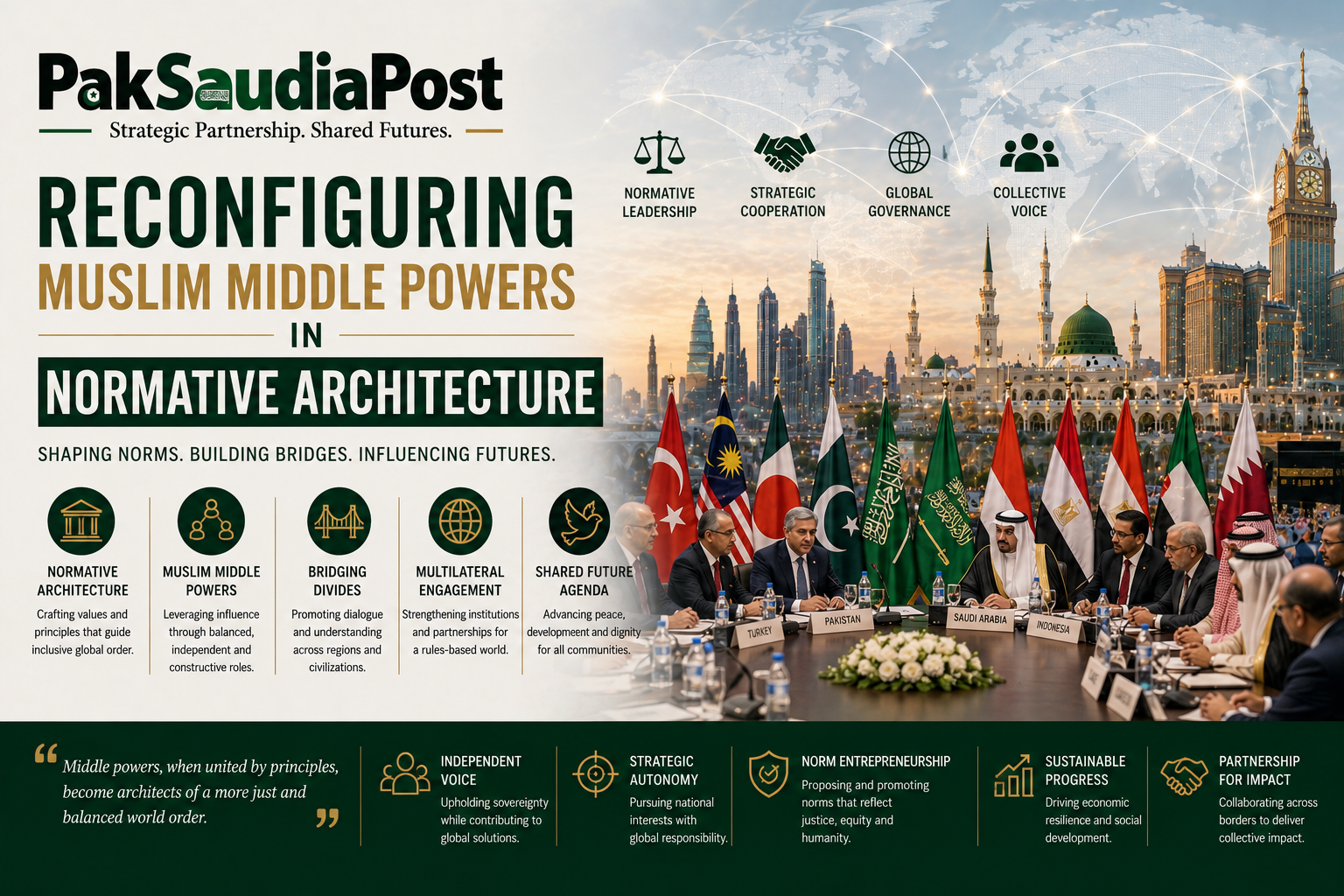
Reconfiguring Muslim Middle Powers in Normative Architecture

BY SHAFQAT ALI QURESHI The architecture of global governance is increasingly contested not only in terms of power distribution but also in terms of legitimacy, procedural fairness, and epistemic authority. Institutions formed in the mid twentieth century continue to structure decision making in

Positioning Pakistan and Saudi Arabia in Multipolar Equilibrium Dynamics

The international system is undergoing a structural reordering in which no single pole can impose durable hierarchy across economic, technological, and security domains. Instead, overlapping spheres of influence are emerging, shaped by transactional alignments, sector specific partnerships, and rapidly shifting diplomatic calibrations. For
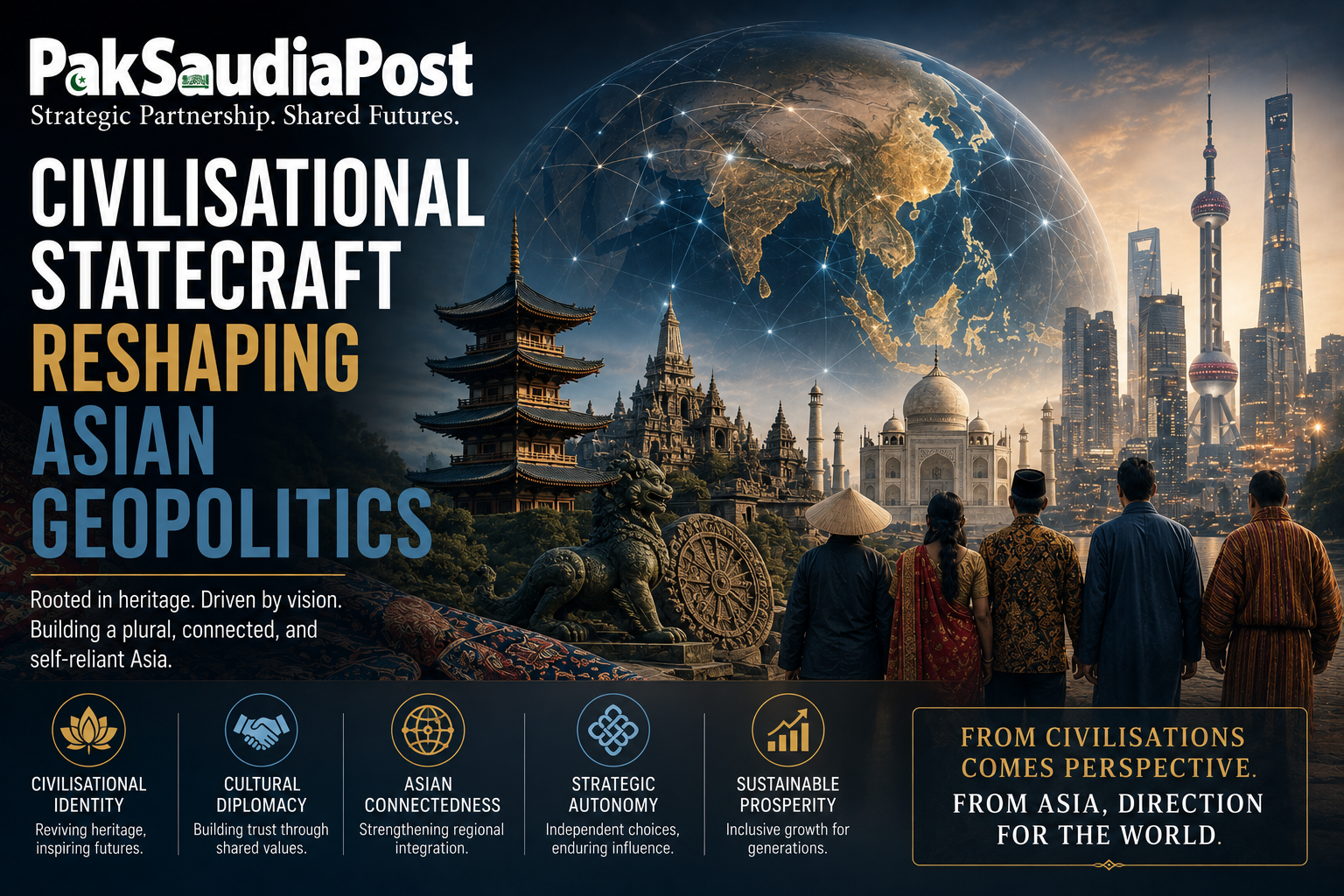
Civilisational Statecraft Reshaping Asian Geopolitics

A quiet but consequential transformation is reshaping the vocabulary of international relations, as states increasingly embed civilisational references within their external policy articulation. This is not a return to antiquated modes of identity politics in diplomacy, nor a rejection of modern statecraft, but
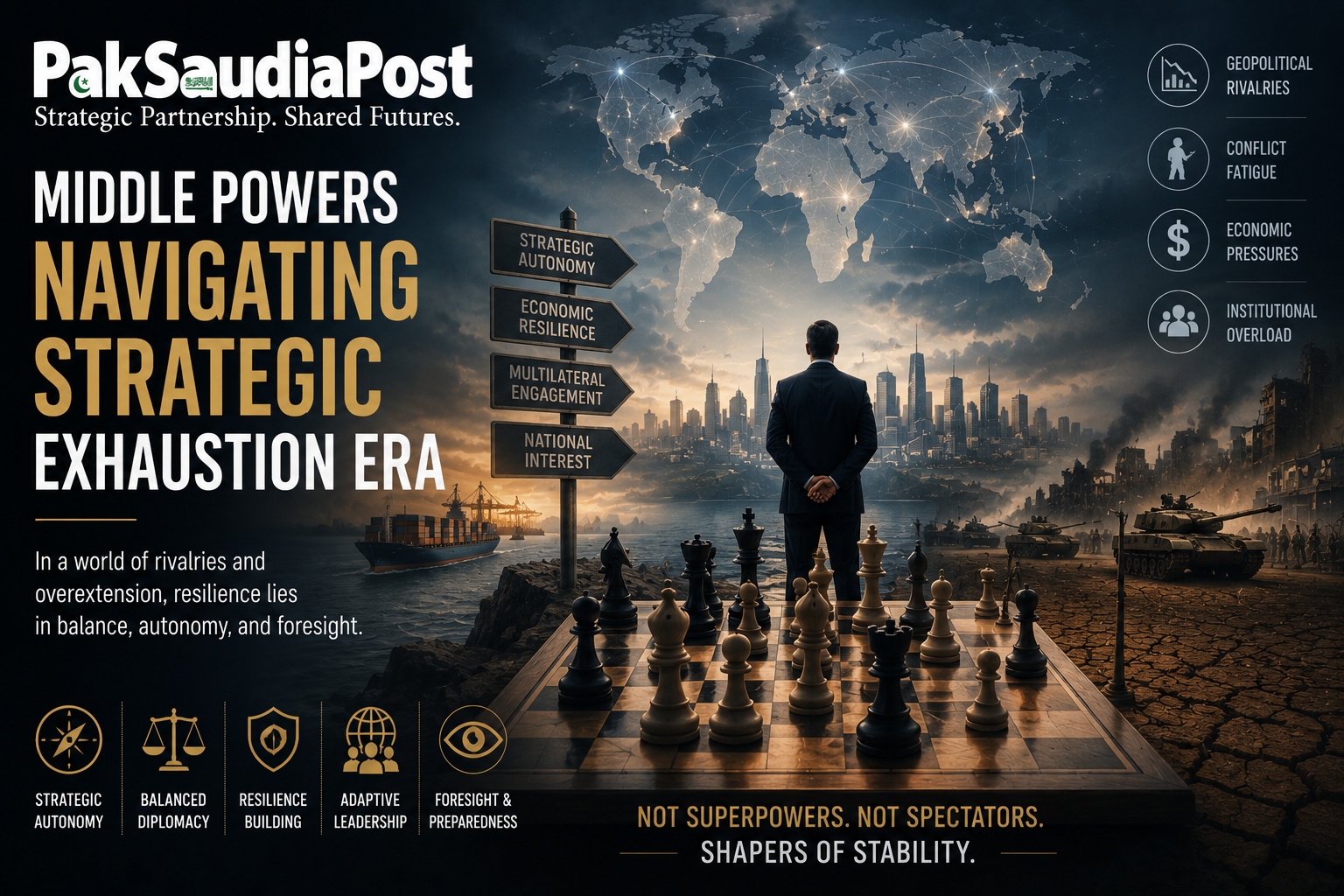
Middle Powers Navigating Strategic Exhaustion Era
The contemporary international system is increasingly defined by a subtle but profound condition that may be described as strategic exhaustion among traditional centres of global authority. This is not a collapse of power in a conventional sense, nor is it a linear transition
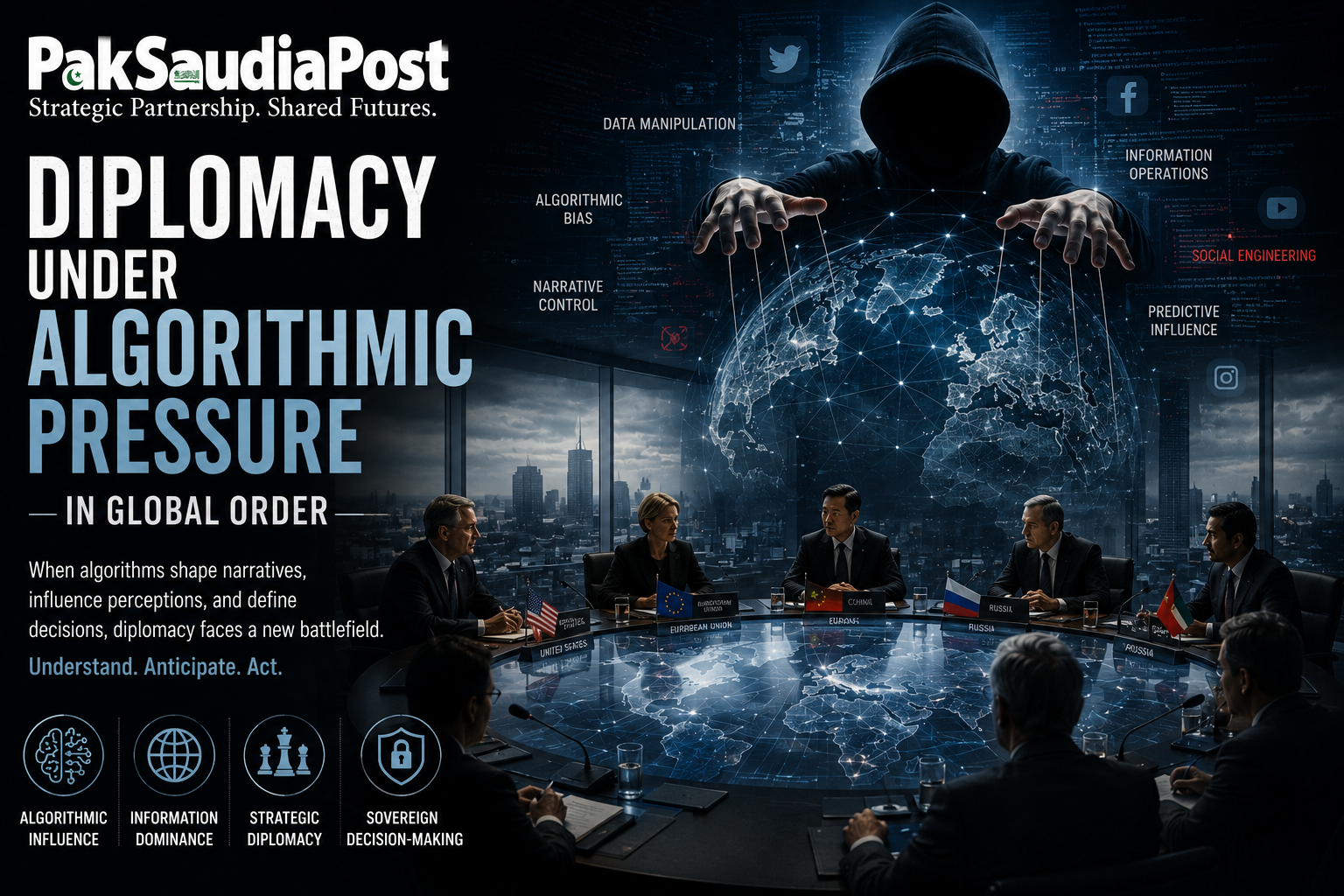
Diplomacy Under Algorithmic Pressure in Global Order
Diplomacy, once defined by the measured cadence of diplomatic cables, closed-door negotiations, and carefully sequenced state communiqués, is now increasingly embedded within a volatile communicative architecture shaped by algorithmic mediation, real-time sentiment oscillation, and platform-driven amplification logics. The contemporary diplomatic environment no longer

China Gulf Nexus Reconfigures Pakistan Saudi Strategic Future Today
BY SHAFQAT ALI QURESHI The expanding role of China in the evolving strategic matrix between Pakistan and Saudi Arabia represents one of the most consequential yet structurally understated transformations in contemporary global geopolitics. Unlike traditional great power interventions that operate through overt military
Saudi Iran Rapprochement Reorders Pakistan Strategic Calculus Today

The normalization of relations between Saudi Arabia and Iran marks one of the most consequential yet under theorised geopolitical shifts in contemporary Middle Eastern diplomacy. While often framed as a bilateral de-escalation between two long standing rivals, its deeper significance lies in the

Post Gaza Diplomacy Reshapes Pakistan Saudi Strategic Equilibrium Today
The Gaza conflict has not merely functioned as another episodic Middle Eastern war, but as a systemic stress test for the moral vocabulary, diplomatic elasticity, and strategic coherence of Muslim-majority states. Within this recalibrated environment, Pakistan and Saudi Arabia find themselves navigating an
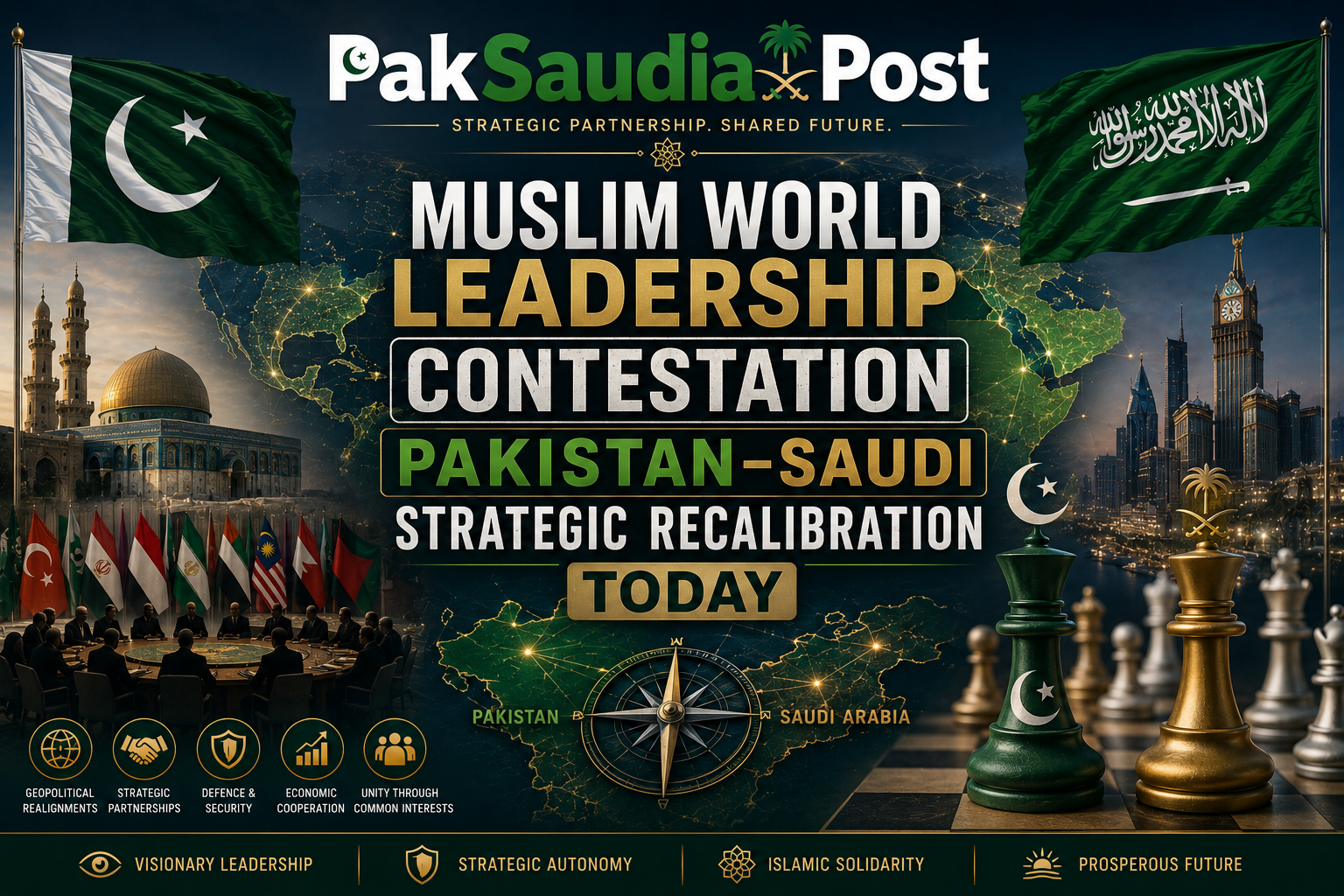
Muslim World Leadership Contestation Pakistan Saudi Strategic Recalibration Today
The question of leadership within the Muslim world has long been less a matter of formal designation and more an evolving contest of symbolic capital, strategic utility, and narrative authority. In the contemporary geopolitical moment, this contest has become more fragmented, more competitive,

Islamic Diplomacy After Ideology Pakistan Saudi Pragmatic Transition Era
By : Shafqat Ali Qureshi The evolution of Pakistan–Saudi relations reflects a broader structural transformation within the Muslim world, where ideological cohesion is gradually giving way to pragmatic statecraft shaped by economic interdependence, geopolitical recalibration, and institutional survival logic. What was once framed