
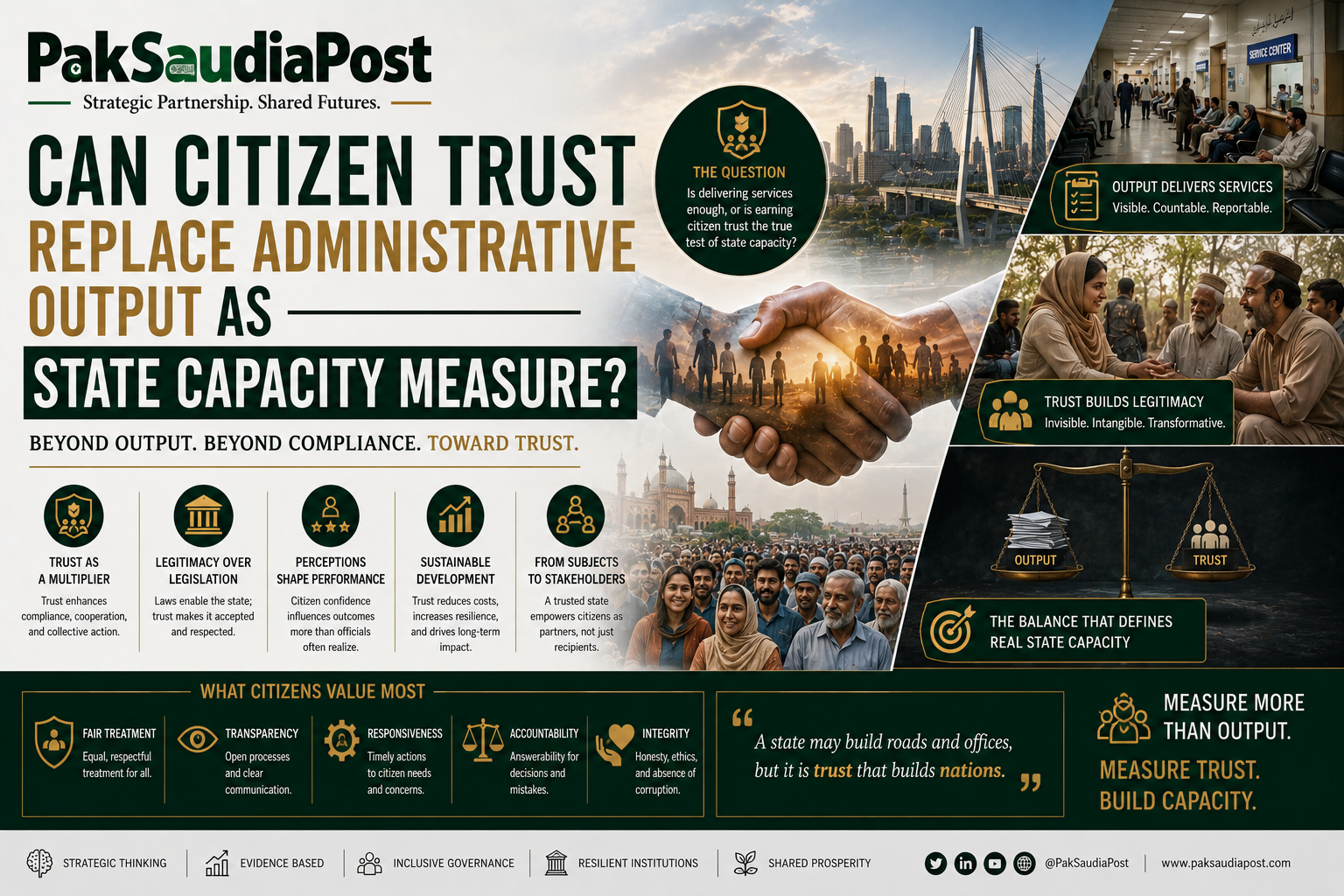
Can Citizen Trust Replace Administrative Output as State Capacity Measure

The conventional grammar of governance assessment has long rested on quantifiable administrative outputs. Budgets executed, infrastructure completed, regulations issued, and services delivered have formed the core metrics through which state capacity is traditionally evaluated. Yet this input-output logic is increasingly misaligned with how
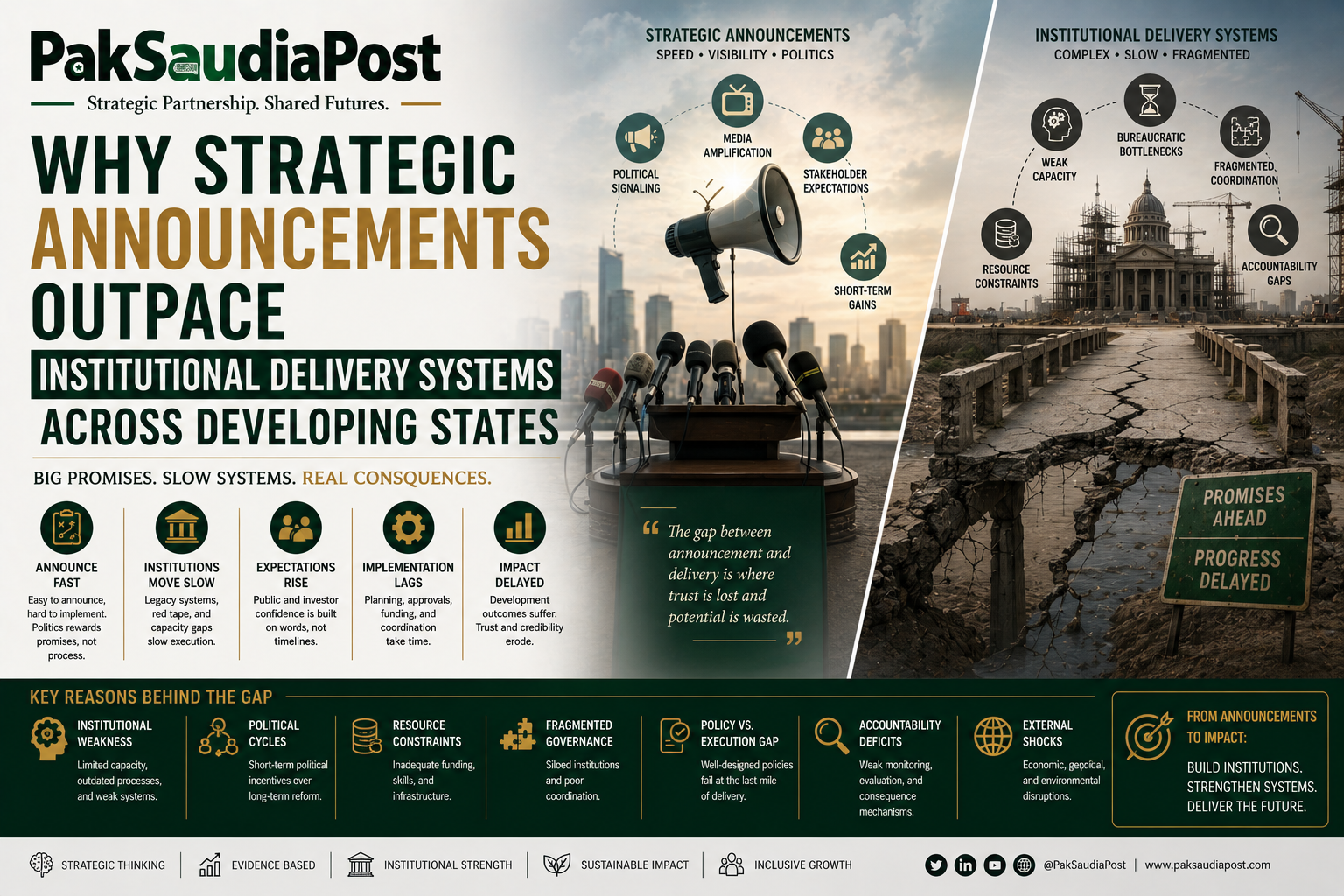
Why Strategic Announcements Outpace Institutional Delivery Systems Across Developing States

In many developing states, the contemporary policy environment is defined by a recurring paradox. Governments announce ambitious transformation agendas with precision, frequency, and visible diplomatic amplification, yet the administrative machinery tasked with converting these announcements into measurable outcomes advances at a markedly slower

Strategic Decision Making in Information Saturation Age
Modern governance is increasingly defined by an epistemic condition in which decision makers are no longer constrained by scarcity of information, but by its excess, velocity, and structural contradiction. The traditional model of statecraft, which assumed that the primary challenge of governance was

Governance Fatigue and Administrative Legitimacy in Developing States Today
The contemporary condition of governance in many developing states is increasingly defined not by institutional absence but by a slow, cumulative erosion of administrative credibility that operates beneath the surface of formal continuity. Governments continue to function, ministries continue to issue directives, and

Pakistan Saudi Institutional Architecture Rebuilds Long Term Strategic Depth
The evolution of Pakistan and Saudi Arabia’s relationship has increasingly moved beyond ceremonial diplomacy and episodic financial cooperation toward a more structurally embedded institutional imagination. What is now emerging, though still uneven and partially articulated, is a recognition in both capitals that sustainable
Pakistan Saudi Middle Power Alignment Reshapes Islamic World Dynamics Order
In the evolving geometry of global power, where traditional hierarchies are dissolving into fluid constellations of influence, the relationship between Pakistan and Saudi Arabia is increasingly being reinterpreted not merely as a bilateral partnership but as a potential axis of middle power coordination

Institutionalizing Pakistan Saudi Relations Through Permanent Strategic Coordination Desk

Pakistan’s economic and strategic relationship with Saudi Arabia has entered a phase where informal diplomacy, episodic engagement, and personality driven negotiations are no longer sufficient to sustain the scale and complexity of emerging financial, energy, and investment linkages. The evolution of global sovereign

Pakistan Saudi Economic Statecraft Structural Convergence and Sovereign Capital Credibility Transformation 2026 to 2031
The emerging architecture of Pakistan–Saudi economic relations is undergoing a structural transition that cannot be adequately interpreted through traditional categories of aid dependence, episodic investment diplomacy, or symbolic geopolitical alignment. The deeper reality is that both states are now operating within a transformed

Policy Dossier One: Institutional Reform Sequencing and Sovereign Capital Conversion Framework for Saudi Pakistan Economic Convergence
The evolving economic relationship between Saudi Arabia and Pakistan is entering a phase where symbolic diplomacy and episodic financial assistance are no longer sufficient to define the trajectory of engagement. The decisive variable now is whether Pakistan can transform itself into a jurisdiction

Labor to Knowledge Transition
The structure of Pakistan Saudi labor relations has historically been one of the most durable yet least theorised pillars of their bilateral engagement, functioning simultaneously as an economic stabiliser for Pakistan and a demographic supplement for Saudi Arabia. For decades, Pakistani labor migration