
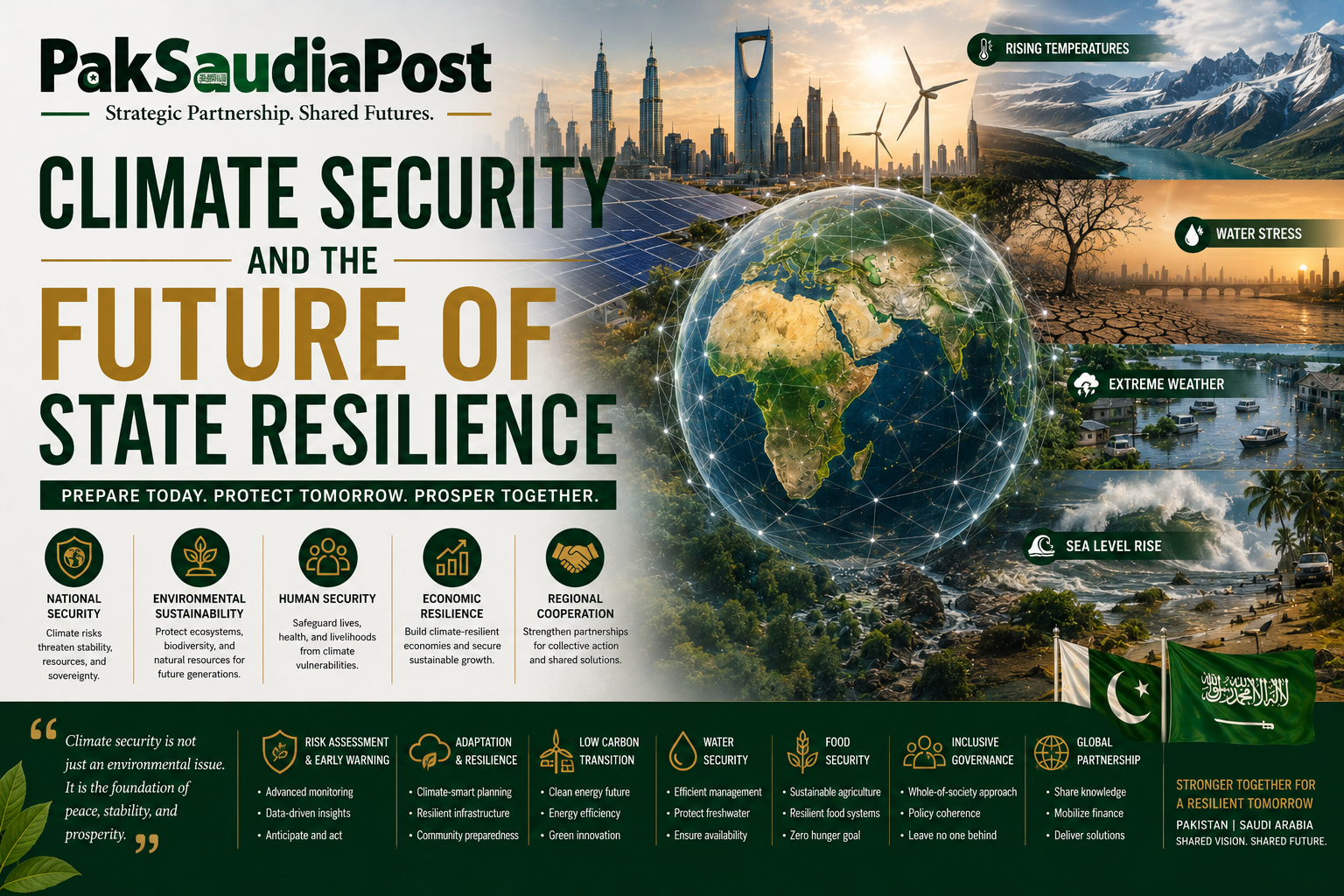
CLIMATE SECURITY AND THE FUTURE OF STATE RESILIENCE

Pakistan and Saudi Arabia are entering a period in which climate dynamics are no longer peripheral environmental stressors but central determinants of state stability, fiscal endurance, and long term governance capacity. The acceleration of heat intensity, water volatility, land degradation, and atmospheric unpredictability
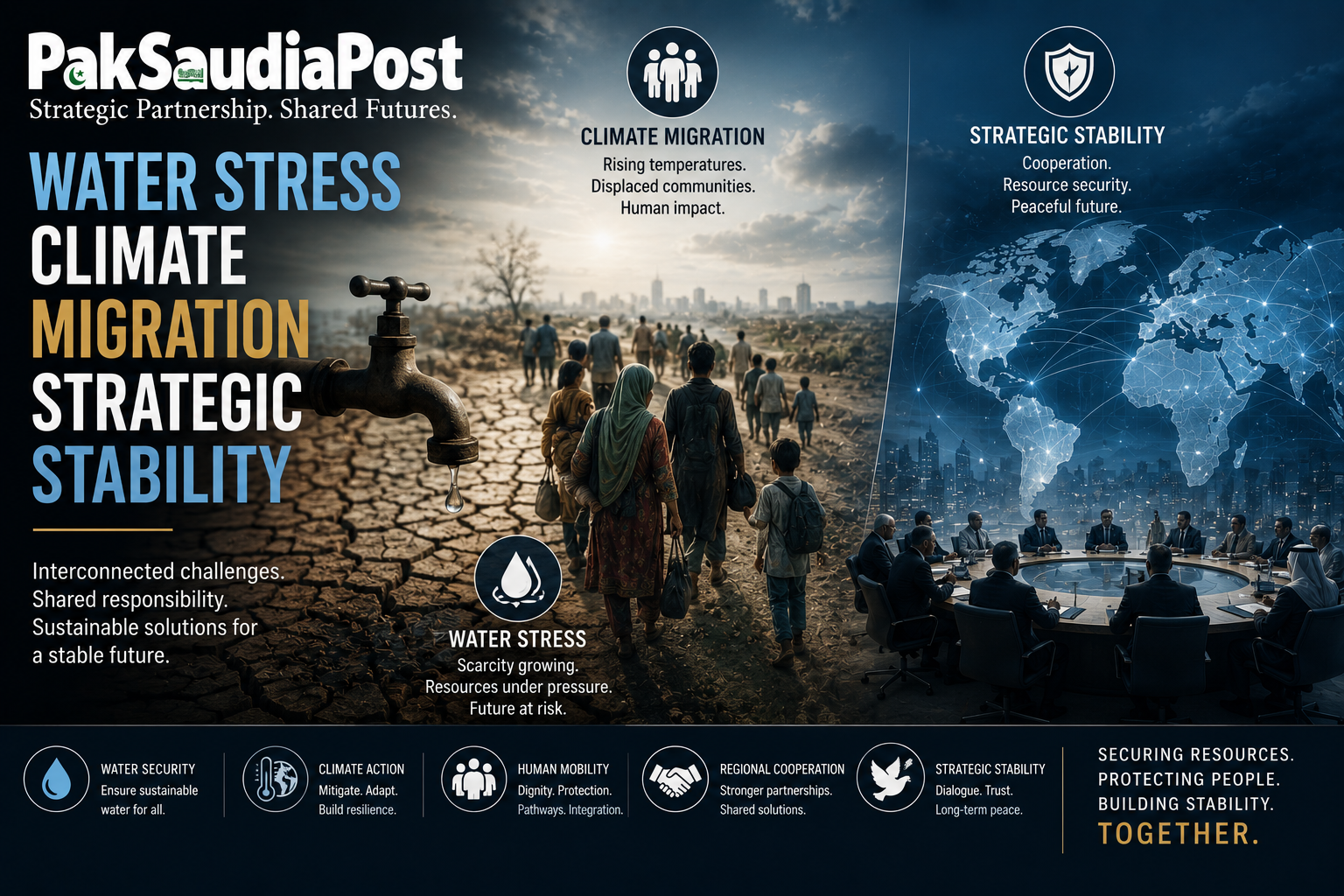
Water Stress Climate Migration Strategic Stability
Across South Asia, hydrological systems are entering a phase of structural volatility that is reshaping not only environmental governance but the deeper architecture of national security, economic planning, and demographic management. Water is no longer a stable background resource assumed within developmental planning;
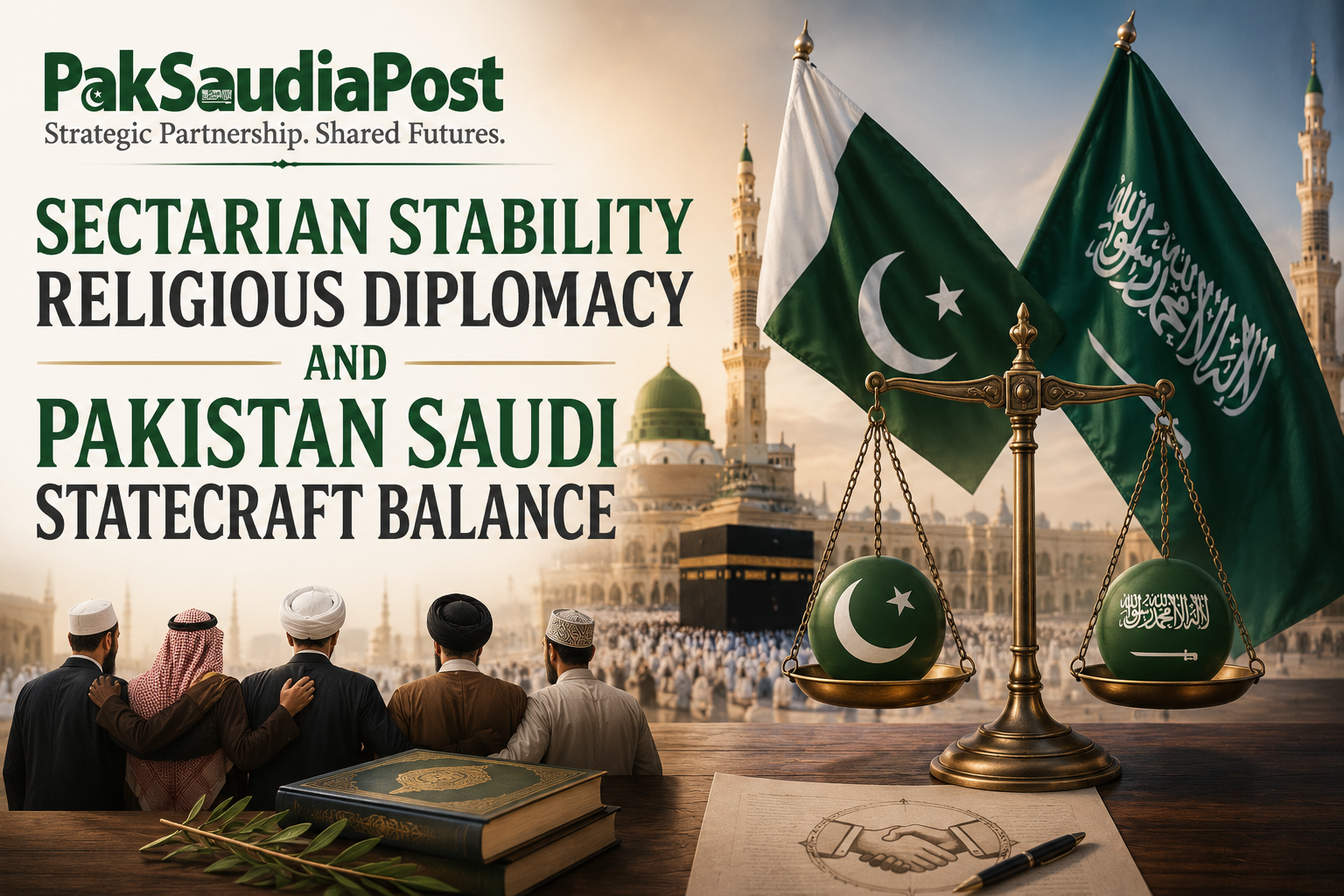
Sectarian Stability Religious Diplomacy and Pakistan Saudi Statecraft Balance
In the contemporary recalibration of Muslim world geopolitics, the relationship between Pakistan and Saudi Arabia occupies a uniquely sensitive intellectual and strategic space, one that is neither reducible to conventional alliance politics nor fully explainable through doctrinal affinity alone. It is instead a

Extremism Reputations and Reform Security Narratives Pakistan Saudi Alignment
The security relationship between Pakistan and Saudi Arabia has long been anchored in a pragmatic convergence of strategic needs, religious affinity, and regional threat perceptions. Yet beneath this surface stability lies a more complex and evolving terrain, where reputational politics, narrative reconstruction, and

Remittance Shock
Pakistan’s macroeconomic architecture is increasingly underwritten by a structural dependence on external labor markets, particularly in the Gulf region, where Saudi Arabia functions as the central node of employment absorption and remittance generation. This configuration has produced a fragile equilibrium in which domestic

Debt Sovereignty Trap
Saudi financial assistance to Pakistan has increasingly evolved into a structural mechanism of geopolitical liquidity management rather than episodic bilateral support, creating a complex architecture where debt, deposits, and deferred oil payments function as instruments of strategic calibration within an uneven global order.
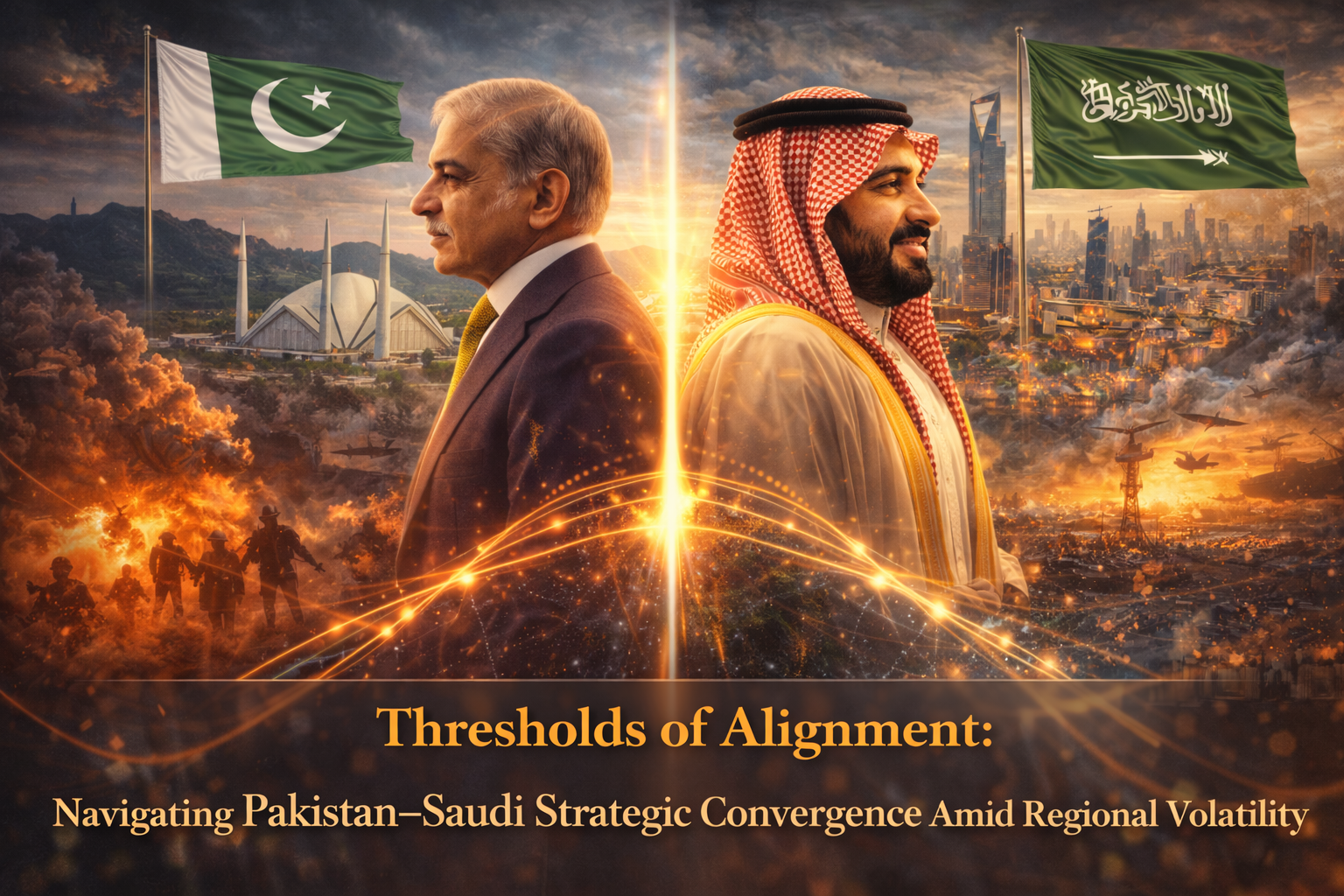
Thresholds of Alignment: Navigating Pakistan–Saudi Strategic Convergence Amid Regional Volatility
The contemporary strategic environment is increasingly characterized by rapid volatility, asymmetric threats, and fluid alliances. In this context, the bilateral nexus between Pakistan and Saudi Arabia is entering a phase where micro decisions carry macro consequences. Beyond formal treaties, economic cooperation, and military

Fiscal Discipline or Social Recalibration: Saudi Arabia’s Internal Economic Transformation in the Vision 2030 Era
Saudi Arabia today is undergoing one of the most profound internal transformations in its modern history, where fiscal policy is no longer a technical instrument of governance but a central pillar in redefining the relationship between the state and society. From Riyadh’s perspective,

Between Restraint and Retaliation: Saudi Arabia’s Strategic Dilemma in the Face of Iranian Escalation
Saudi Arabia today stands at a defining strategic crossroads where restraint is no longer a passive choice but a calculated posture under increasing strain. From Riyadh’s vantage point, the regional environment has entered a phase of calibrated instability in which Iranian actions, whether