

Remittance Shock

Pakistan’s macroeconomic architecture is increasingly underwritten by a structural dependence on external labor markets, particularly in the Gulf region, where Saudi Arabia functions as the central node of employment absorption and remittance generation. This configuration has produced a fragile equilibrium in which domestic

Constrained Neutrality

Pakistan’s aspiration to function as a credible intermediary in regional conflicts is increasingly shaped by a structural condition that can be described as constrained neutrality, a state in which diplomatic positioning is formally autonomous yet substantively conditioned by financial dependence, security entanglements, and

Debt Sovereignty Trap
Saudi financial assistance to Pakistan has increasingly evolved into a structural mechanism of geopolitical liquidity management rather than episodic bilateral support, creating a complex architecture where debt, deposits, and deferred oil payments function as instruments of strategic calibration within an uneven global order.

Diaspora Exposure as a Strategic Pressure Lever in Pakistan–Saudi Engagement An Imperative for Policy Paradigm Shift
In the contemporary age of geopolitics the vulnerability of states is rarely confined to overt military confrontation. Rather strategic leverage has evolved into more nuanced instruments encompassing economic interdependence labor mobility financial flows and human security. Nowhere is this more evident than in
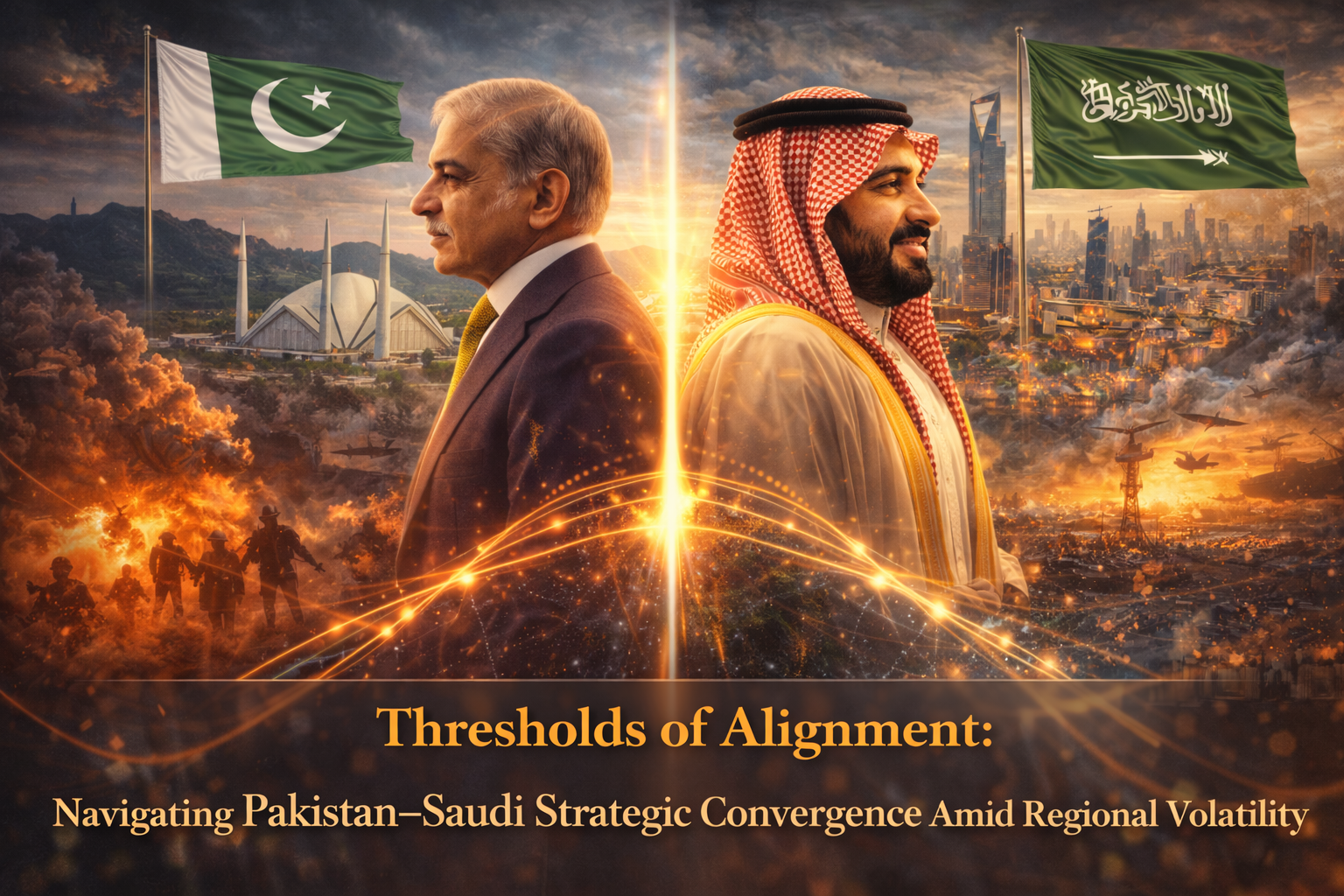
Thresholds of Alignment: Navigating Pakistan–Saudi Strategic Convergence Amid Regional Volatility
The contemporary strategic environment is increasingly characterized by rapid volatility, asymmetric threats, and fluid alliances. In this context, the bilateral nexus between Pakistan and Saudi Arabia is entering a phase where micro decisions carry macro consequences. Beyond formal treaties, economic cooperation, and military

Between Restraint and Retaliation: Saudi Arabia’s Strategic Dilemma in the Face of Iranian Escalation
Saudi Arabia today stands at a defining strategic crossroads where restraint is no longer a passive choice but a calculated posture under increasing strain. From Riyadh’s vantage point, the regional environment has entered a phase of calibrated instability in which Iranian actions, whether