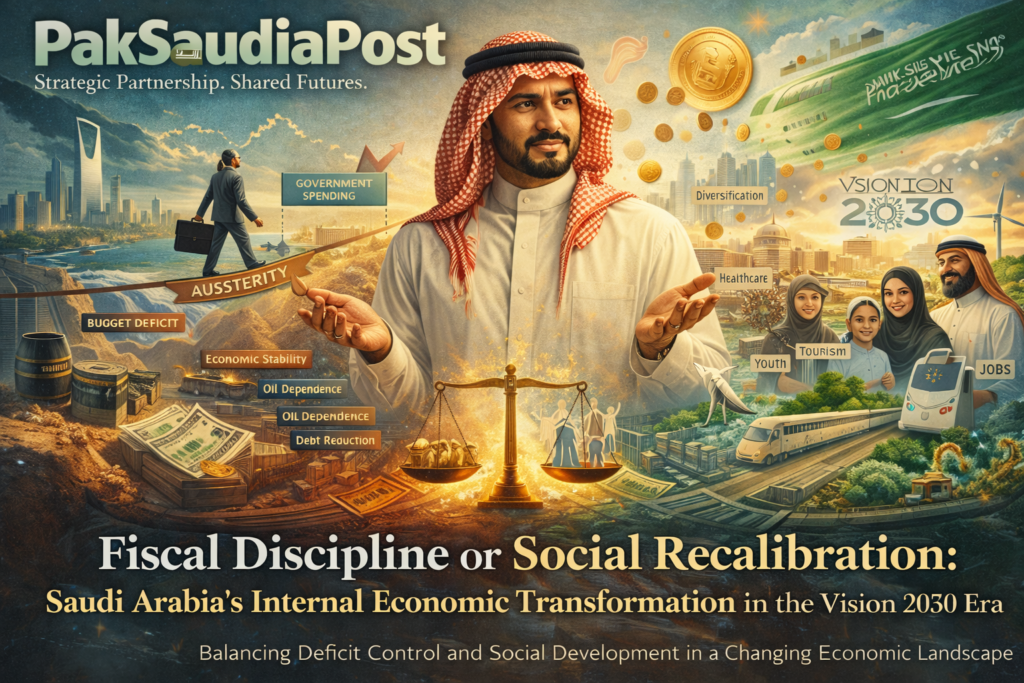
Fiscal Discipline or Social Recalibration: Saudi Arabia’s Internal Economic Transformation in the Vision 2030 Era

Saudi Arabia today is undergoing one of the most profound internal transformations in its modern history, where fiscal policy is no longer a technical instrument of governance but a central pillar in redefining the relationship between the state and society. From Riyadh’s perspective, the shift is not simply about balancing budgets or introducing new taxes, but about recalibrating an entire economic philosophy that has long been rooted in oil wealth, state provision, and social stability. The transition toward a diversified, tax-supported economy under Vision 2030 reflects a strategic necessity driven by global energy transitions, demographic pressures, and the ambition to position the Kingdom as a resilient and competitive economic power. This transformation, however, carries deep domestic implications that extend into everyday life, shaping consumption patterns, social expectations, and the evolving identity of the Saudi citizen within a changing economic order.
The foundation of Saudi Arabia’s traditional economic model rested on what has often been described as a rentier system, where the state derived its revenues primarily from oil exports and redistributed wealth through subsidies, public sector employment, and extensive welfare provisions. This model ensured a high degree of social stability and allowed the state to maintain a strong presence in economic life without imposing direct taxation on citizens. However, fluctuations in oil prices, combined with the long-term uncertainty surrounding global energy demand, exposed the vulnerabilities of this system. The need for fiscal sustainability and economic diversification became increasingly urgent, prompting a strategic shift toward expanding non-oil revenues and restructuring state expenditure.
At the center of this shift lies the introduction and expansion of taxation mechanisms that were previously absent or minimal in Saudi Arabia. The implementation of value added tax marked a significant departure from historical practice, signaling the emergence of a new fiscal paradigm in which citizens and residents contribute directly to state revenue. Over time, this system has evolved, with adjustments in rates and scope reflecting both fiscal needs and policy objectives. Excise taxes on specific goods, particularly those linked to public health concerns such as sugary beverages, represent another dimension of this transformation. These measures are not solely revenue generating tools but also instruments of behavioral policy, designed to influence consumption patterns and improve long-term health outcomes.
The expansion of taxation has been accompanied by a gradual rationalization of subsidies, particularly in the energy sector. Historically, low fuel and electricity prices were a hallmark of the Saudi welfare model, providing tangible benefits to citizens and supporting economic activity. However, these subsidies also imposed a significant fiscal burden and contributed to inefficiencies in energy consumption. The adjustment of energy prices toward market levels reflects a broader effort to align domestic consumption with global realities, improve fiscal discipline, and encourage more efficient use of resources. This transition, while necessary from a policy perspective, has direct implications for household expenses, business costs, and overall economic behavior.
The impact of these reforms on the Saudi middle class is particularly significant. As taxation increases and subsidies are reduced, the cost of living rises, placing pressure on household budgets and altering consumption patterns. For a society accustomed to a certain level of state support, this shift requires adaptation and adjustment. The middle class, which plays a critical role in economic development and social stability, must navigate a changing landscape in which financial planning, savings, and investment decisions take on greater importance. At the same time, the state must ensure that these pressures do not undermine public confidence or create perceptions of inequity.
To address these challenges, Saudi Arabia has implemented targeted support mechanisms designed to cushion the impact of reforms on vulnerable segments of society. Programs aimed at income support, housing assistance, and employment generation are integral to maintaining social balance during the transition. The objective is to replace broad, untargeted subsidies with more efficient and equitable forms of support that address specific needs while preserving fiscal sustainability. This approach reflects a shift from universal provision to targeted intervention, aligning social policy with economic reform.
The private sector occupies a central role in this evolving economic model. As the state reduces its direct involvement in economic activity, the private sector is expected to drive growth, innovation, and employment. Taxation reforms, regulatory changes, and initiatives to improve the business environment are all designed to facilitate this transition. However, the development of a robust private sector requires more than policy adjustments. It involves cultural change, entrepreneurial development, and the creation of a competitive ecosystem that encourages investment and productivity. The introduction of compliance mechanisms, such as digital salary systems and transparency requirements, reflects an effort to formalize economic activity and enhance accountability.
Labor market dynamics are also undergoing transformation. The emphasis on employment generation, particularly for Saudi nationals, is a key component of Vision 2030. Fiscal reforms intersect with labor policies in complex ways, influencing wage structures, employment incentives, and workforce participation. The move toward greater transparency in wage payments and employment contracts aims to protect workers’ rights while promoting efficiency and fairness in the labor market. At the same time, the challenge of aligning workforce skills with market demands remains a critical issue, requiring investment in education, training, and capacity building.
Public perception and social adaptation are central to the success of these reforms. Economic transformation on this scale inevitably generates uncertainty and resistance, particularly when it involves changes to long-standing practices and expectations. The Saudi leadership has recognized the importance of communication and engagement in managing this transition. By articulating the rationale behind reforms and emphasizing long-term benefits, the state seeks to build public support and foster a sense of shared purpose. Transparency in policy implementation and responsiveness to public concerns are essential in maintaining trust and legitimacy.
The broader economic implications of fiscal reform extend to investment, growth, and global integration. By diversifying revenue sources and improving fiscal discipline, Saudi Arabia enhances its attractiveness as an investment destination. Stability and predictability in economic policy are key factors for investors, and the Kingdom’s commitment to reform signals a long-term vision that aligns with global economic trends. The development of sectors such as tourism, technology, and renewable energy reflects a strategic effort to reduce dependence on oil and create new sources of growth.
At the same time, the Kingdom must balance fiscal discipline with the need to sustain economic momentum. Public spending remains a critical driver of development, particularly in infrastructure and strategic projects. The decision to maintain expansionary budgets despite fiscal reforms reflects an understanding that transformation requires investment. Managing deficits while pursuing ambitious development goals is a complex task that requires careful planning and prioritization. The interplay between revenue generation and expenditure management defines the trajectory of Saudi economic policy in this transitional phase.
Health and social behavior represent another dimension of policy impact. Excise taxes on unhealthy products are part of a broader effort to address public health challenges and reduce long-term healthcare costs. By influencing consumption patterns, these policies aim to improve population health and enhance productivity. The integration of economic and social objectives reflects a holistic approach to policy making, where fiscal measures serve multiple purposes beyond revenue generation.
The long-term success of Saudi Arabia’s fiscal transformation depends on its ability to institutionalize reform and adapt to changing circumstances. Economic diversification is not a one-time process but an ongoing effort that requires flexibility, innovation, and resilience. The Kingdom’s capacity to learn from experience, adjust policies, and respond to emerging challenges will determine the sustainability of its transformation.
In conclusion, Saudi Arabia’s fiscal reforms represent a fundamental shift in the structure and philosophy of its domestic economic system. The transition from a rentier model to a diversified, tax-supported economy is reshaping the relationship between the state and society, redefining expectations, and creating new opportunities for growth and development. While the challenges are significant, the strategic vision underpinning these reforms provides a framework for long-term stability and prosperity. By balancing fiscal discipline with social responsibility, and by integrating economic, social, and institutional dimensions, Saudi Arabia is navigating a complex transformation that will shape its future for decades to come.
A Public Service Message