Debt Sovereignty Trap


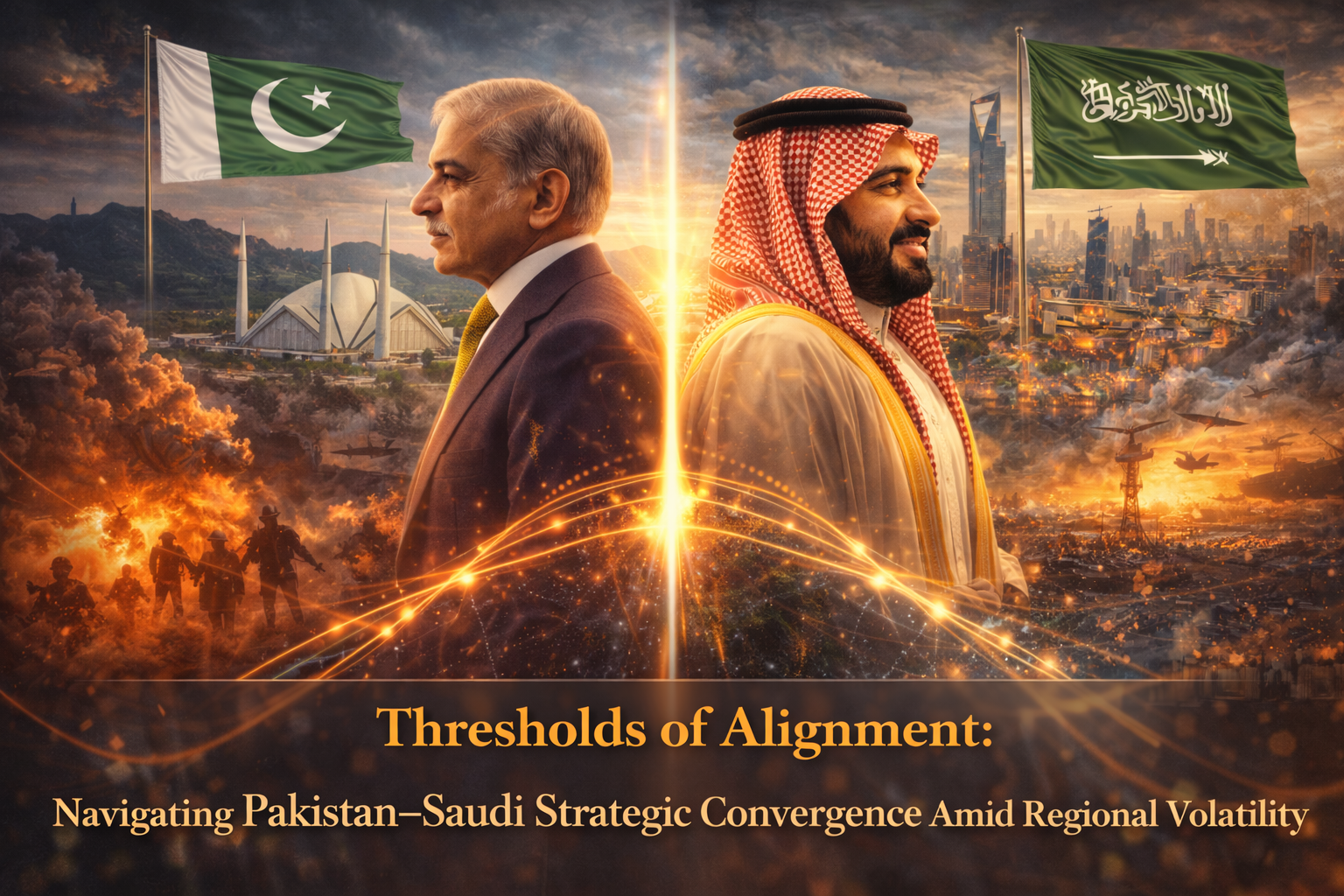
Saudi financial assistance to Pakistan has increasingly evolved into a structural mechanism of geopolitical liquidity management rather than episodic bilateral support, creating a complex architecture where debt, deposits, and deferred oil payments function as instruments of strategic calibration within an uneven global order. What appears externally as cyclical rescue financing is in fact a sustained system of asymmetric interdependence in which Pakistan’s macroeconomic stability is partially contingent upon Gulf fiscal discretion, while Saudi Arabia simultaneously internalizes Pakistan as a peripheral but functionally significant node within its regional security and labor network.
Within the analytical frame of dependency theory, this relationship reflects a classic center periphery configuration, yet it deviates from orthodox formulations in one critical respect, namely that dependency is not purely extractive but reciprocally stabilizing. Pakistan’s recurring external account crises are mitigated through Saudi liquidity injections, while Saudi Arabia derives indirect security externalities through Pakistan’s defense alignment and manpower exports. This produces what neo structuralist literature would define as a condition of managed dependency, where asymmetry does not collapse into domination but stabilizes into predictable reciprocity under constrained sovereignty.
Recent financial arrangements reported in global financial coverage indicate that Saudi deposits continue to play a decisive role in Pakistan’s foreign exchange stabilization strategy, particularly in meeting IMF reserve benchmarks and avoiding default thresholds during repayment cycles. These inflows are not unconditional transfers but structured liquidity placements that reinforce policy signaling channels between Riyadh and Islamabad. The very architecture of this assistance embeds implicit expectations of strategic alignment, even in the absence of explicit conditionality clauses, thereby generating what can be described as soft sovereign guidance through financial dependency.
From Pakistan’s perspective, this creates a paradox of fiscal survival. On one hand, Saudi liquidity enables macroeconomic continuity, stabilizes currency volatility, and prevents immediate balance of payments collapse. On the other hand, it narrows the policy autonomy space by embedding external expectations into domestic economic decision making. Sovereignty in this context is not formally compromised but operationally constrained, producing what international political economy scholars term elastic sovereignty, where autonomy exists in legal form but is continuously negotiated through external financial lifelines.
Saudi Arabia’s internal strategic calculus is equally complex. As the kingdom advances its long-term diversification agenda under Vision oriented restructuring, it increasingly seeks to optimize external partnerships that provide both security depth and labor market flexibility. Pakistan occupies a unique position within this design, functioning simultaneously as a source of skilled and semi-skilled labor, a strategic defense partner, and a geopolitical buffer within broader Islamic world alignments. Financial assistance therefore operates not as charity but as investment in systemic stability across multiple vectors.
The interaction between these two asymmetries generates a layered interdependence structure. Pakistan depends on Saudi liquidity for macroeconomic stabilization, while Saudi Arabia depends on Pakistan for strategic manpower and regional security complementarity. However, the balance of this interdependence is structurally skewed because financial dependency translates more rapidly into policy influence than labor dependency translates into counter leverage. This asymmetry is central to understanding why repeated cycles of assistance do not produce diversification away from dependency but rather reinforce its durability.
Complex interdependence theory suggests that such relationships are not governed solely by military or political hierarchies but by dense networks of economic, institutional, and social linkages. In the Pakistan Saudi case, these linkages are intensified by migration flows, remittance corridors, defense cooperation, and financial stabilization mechanisms that collectively produce a high-density interdependence environment. Yet unlike symmetrical interdependence models, the distribution of vulnerability is uneven. Pakistan bears higher adjustment costs during external shocks, while Saudi Arabia retains greater flexibility in calibrating financial exposure.
This imbalance becomes particularly visible during global liquidity tightening cycles, when Pakistan’s access to international capital markets contracts and reliance on Gulf support increases. In such moments, Saudi Arabia’s role transitions from partner to gatekeeper of liquidity continuity, shaping Pakistan’s engagement with multilateral institutions indirectly through reserve stabilization mechanisms. The result is not overt coercion but structural steering, where economic necessity aligns policy behavior without formal imposition.
Nevertheless, it would be analytically reductive to interpret this relationship solely through dependency reductionist lenses. Pakistan exercises agency within this structure by leveraging its geopolitical positioning, nuclear deterrence capability, and demographic labor surplus to remain indispensable within regional calculations. This produces a form of negotiated dependency where vulnerability is offset by strategic irreducibility. In other words, Pakistan is financially fragile but geopolitically non substitutable, a condition that sustains its access to external liquidity despite chronic macroeconomic instability.
The long-term trajectory of this relationship will depend on whether Pakistan can transition from labor export driven foreign exchange accumulation toward export diversification and domestic productivity expansion. Without such structural transformation, liquidity dependence will remain embedded within the architecture of sovereign survival. For Saudi Arabia, the challenge lies in managing exposure to external fiscal liabilities while ensuring that strategic partnerships do not evolve into asymmetric burden accumulation.
Ultimately, the Pakistan Saudi financial nexus illustrates a broader transformation in global political economy, where sovereignty is no longer defined by insulation from external influence but by the capacity to navigate and stabilize within networks of asymmetrical interdependence. Debt, in this configuration, is not merely an obligation but a medium of geopolitical integration, and financial assistance becomes a mechanism through which sovereignty is continuously negotiated rather than permanently secured.
A Public Service Message