

Kashmir Gaza Global South Narrative Pakistan Saudi Coordination Shift

The contemporary international system is increasingly defined not only by material power distributions but by contested narrative ecosystems in which legitimacy, victimhood, sovereignty, and humanitarian urgency are continuously negotiated across digital and institutional spaces. Within this evolving communicative order, Kashmir and Gaza have

Saudi Arabia Regional Moderation Pakistan Diplomatic Opportunity Rise

Saudi Arabia’s contemporary foreign policy recalibration represents one of the most consequential yet under-analysed strategic transformations in the modern Muslim world. It is no longer merely a regional power operating within rigid ideological frameworks, but a state actively repositioning itself as a global
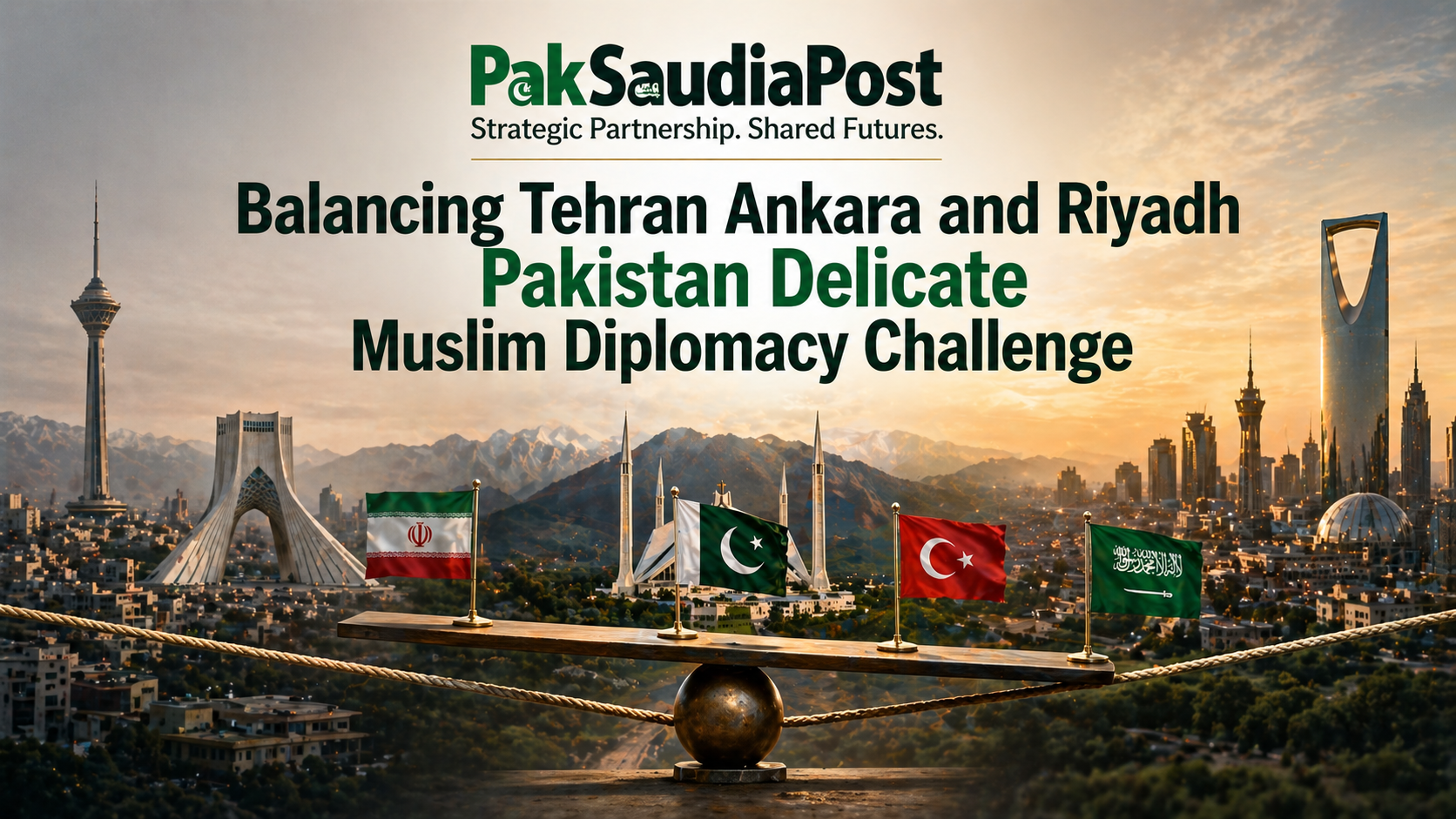
Balancing Tehran Ankara and Riyadh Pakistan Delicate Muslim Diplomacy Challenge

Pakistan’s foreign policy is increasingly shaped by a geopolitical condition that is neither fully stable nor entirely fluid, but suspended in a permanent state of calibrated tension. At the heart of this condition lies a triangular diplomatic reality involving Tehran, Ankara, and Riyadh,

Pakistan Saudi Strategic Evolution Toward Partnership Today
The relationship between Pakistan and Saudi Arabia has experienced a profound structural evolution over several decades, shifting from a rent based patronage model toward a more complex framework of strategic interdependence. What was once primarily characterized by financial assistance, labor migration, and intermittent

The Muslim World Leadership Contest
The question of leadership in the Muslim world has always been less about formal authority and more about competing claims to legitimacy, influence, and strategic centrality. In the contemporary era, this contest has become increasingly diffuse, shaped not by a single ideological axis

Saudi Arabia’s South Asian Pivot
Saudi Arabia’s expanding engagement with South Asia, and particularly its deepening strategic attention toward Pakistan, reflects a quiet but consequential transformation in the Kingdom’s foreign policy architecture. What was once a relationship largely defined by labor migration, energy trade, and episodic financial support
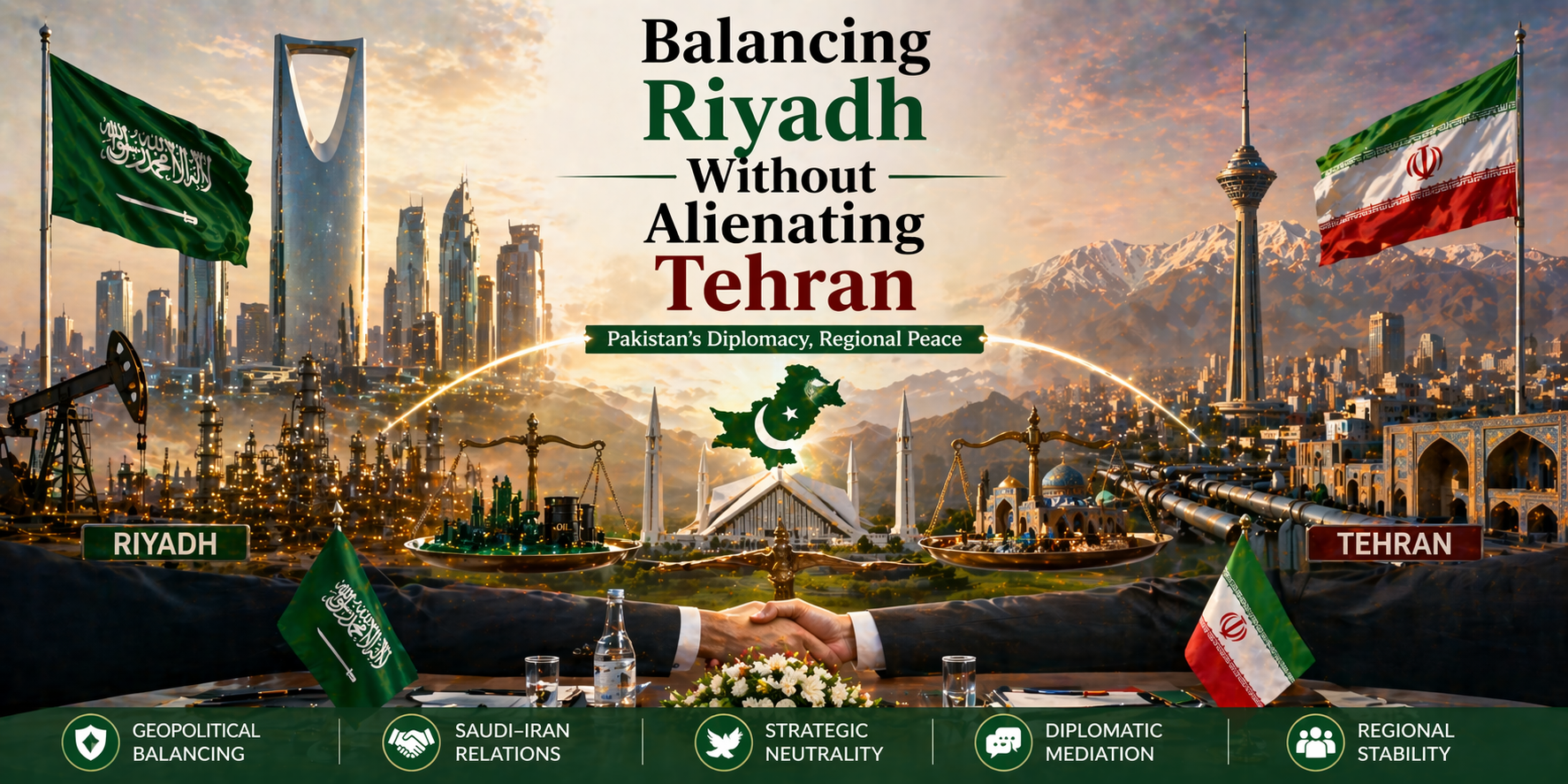
Balancing Riyadh Without Alienating Tehran
Pakistan’s foreign policy has long been described as a study in constrained motion, a state perpetually navigating between necessity and geography, ideology and economics, proximity and patronage. Nowhere is this more visible than in its attempt to balance its ties with Saudi Arabia

The Fortress of Sovereignty: Pakistan Saudi Economic Shield in a Volatile Global Order
The contemporary global order is increasingly characterized by the weaponization of economics. Sanctions, financial isolation, trade restrictions, and supply chain manipulation have emerged as instruments of coercion in international relations. States that lack resilience in the face of such pressures are compelled to

The Artery of Influence: Pakistan Saudi Energy Corridor and Regional Strategic Leverage
Energy constitutes the lifeblood of modern states. The uninterrupted flow of oil, gas, and refined products underpins national economies, determines industrial productivity, and shapes the balance of power in a region increasingly defined by resource scarcity and strategic competition. Pakistan occupies a geographic

Food Security Diplomacy and Land-Lease Geopolitics: Pakistan’s Emerging Role in Regional Agrarian Strategy
Food has emerged as a critical dimension of national security and geopolitical leverage in the twenty-first century. States with agrarian capacity increasingly find themselves courted by resource-dependent economies seeking stability in their food supplies. Pakistan, endowed with fertile lands, diverse agro-ecologies, and a