
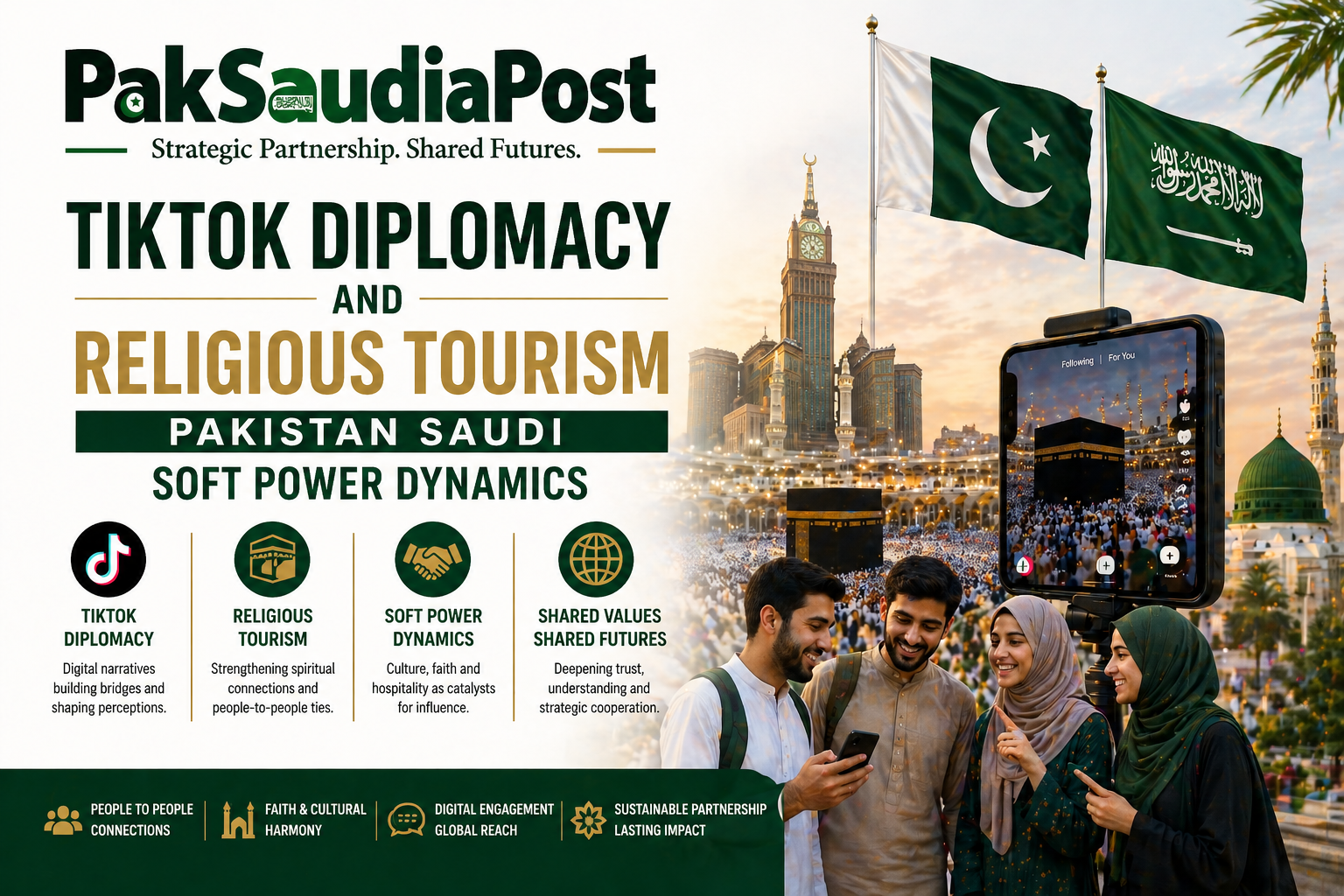
TikTok Diplomacy and Religious Tourism Pakistan Saudi Soft Power Dynamics

The evolving relationship between Pakistan and Saudi Arabia is increasingly being mediated through channels that were structurally irrelevant a decade ago. What once operated through state-to-state diplomacy, oil financing arrangements, labor export regimes, and pilgrimage administration is now being refracted through algorithmic platforms,
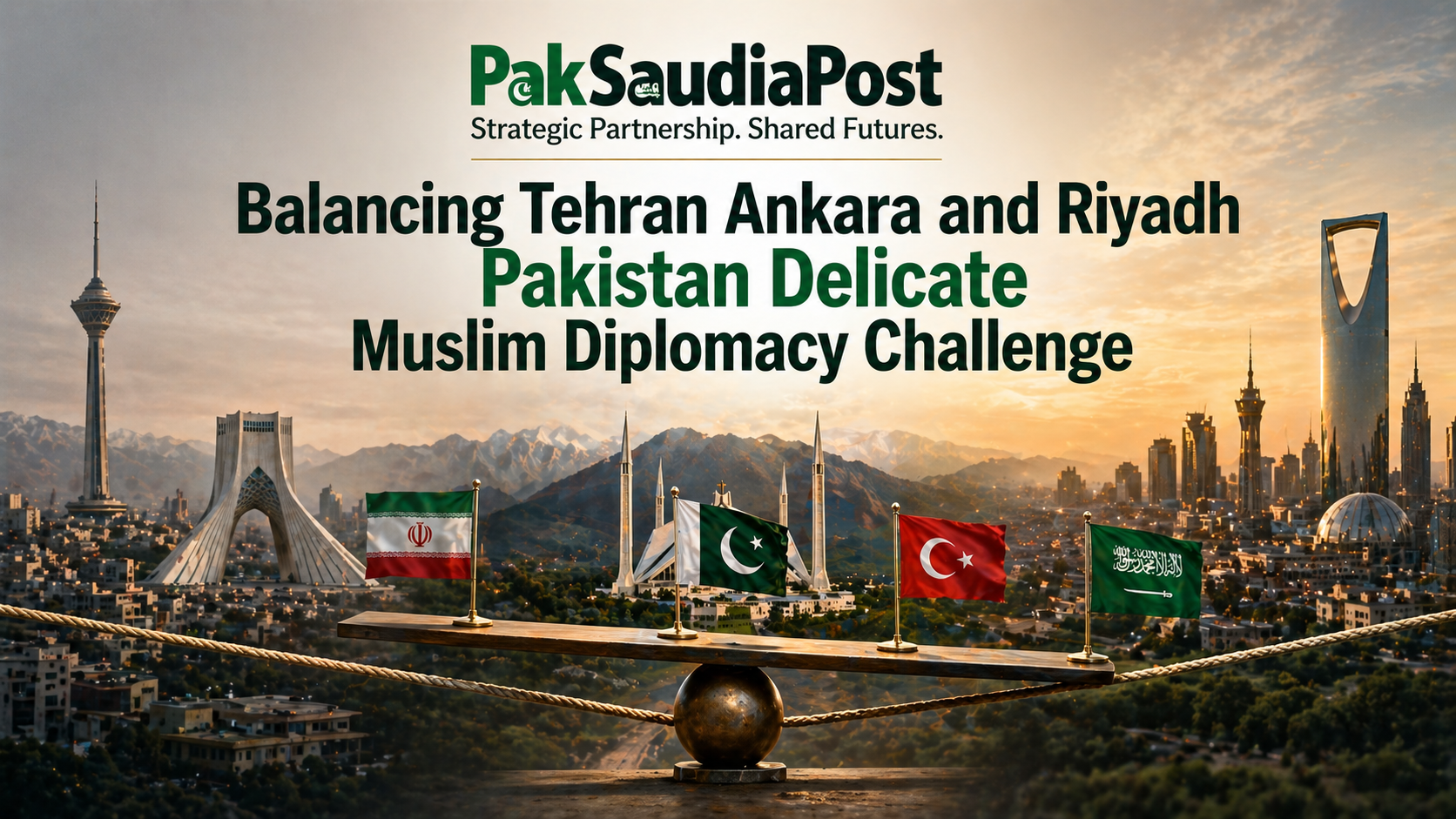
Balancing Tehran Ankara and Riyadh Pakistan Delicate Muslim Diplomacy Challenge
Pakistan’s foreign policy is increasingly shaped by a geopolitical condition that is neither fully stable nor entirely fluid, but suspended in a permanent state of calibrated tension. At the heart of this condition lies a triangular diplomatic reality involving Tehran, Ankara, and Riyadh,
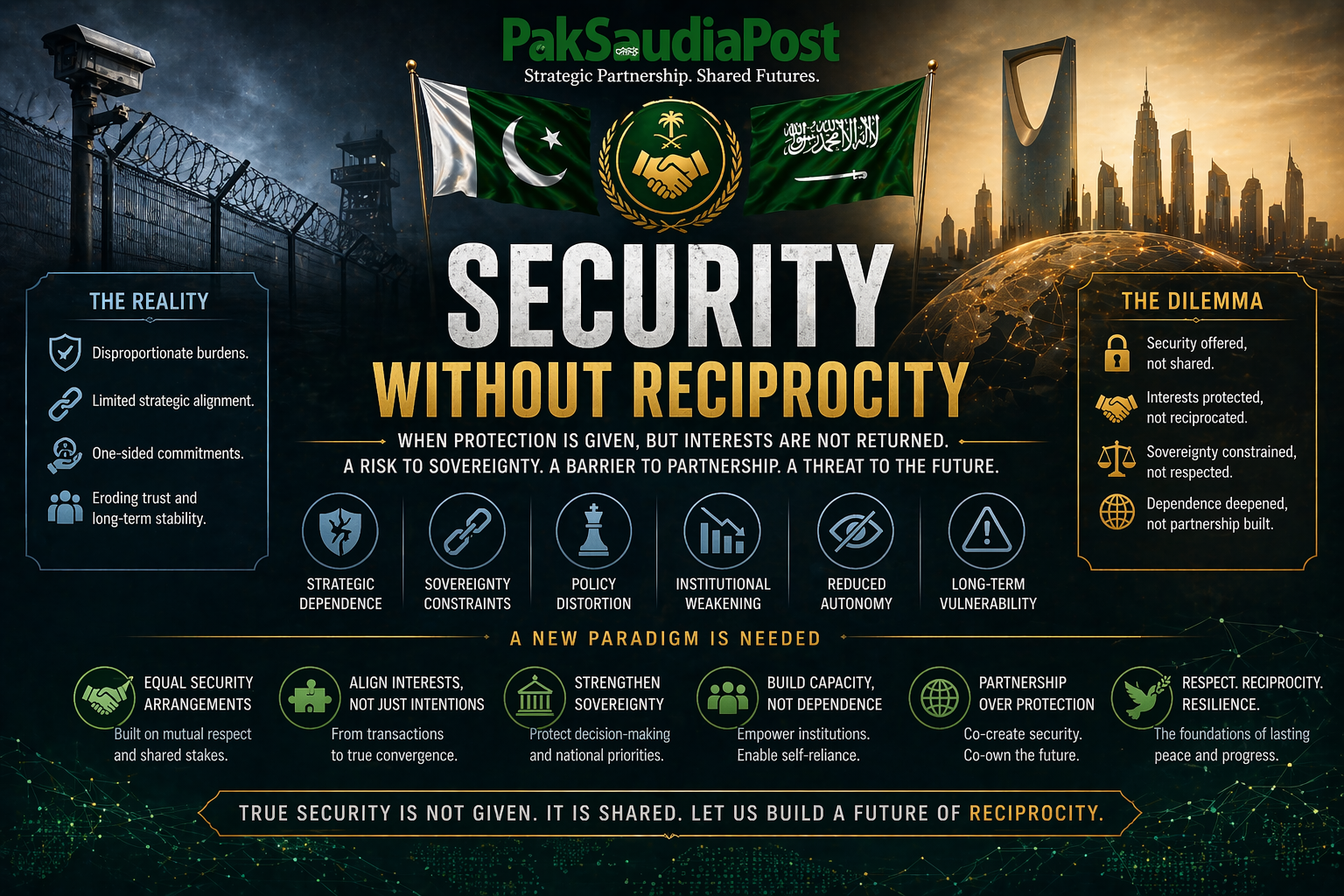
Security Without Reciprocity
The architecture of contemporary defence cooperation among economically unequal states exposes a deep philosophical inconsistency at the heart of modern security theory: the assumption that security is inherently mutual, even when the material conditions that sustain it are profoundly asymmetrical. In practice, security
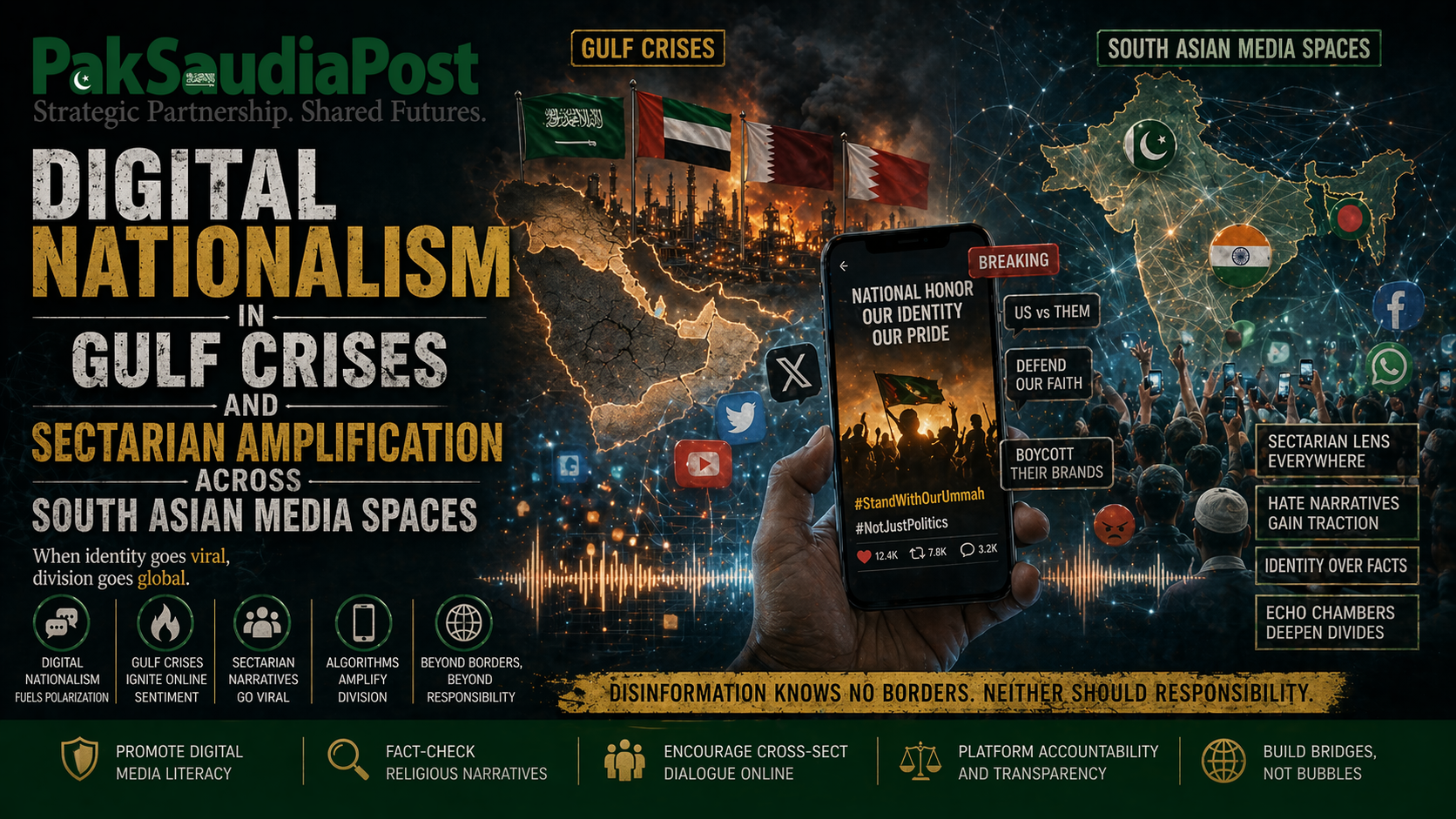
Digital Nationalism in Gulf Crises and Sectarian Amplification across South Asian Media Spaces
The contemporary global information order has undergone a profound transformation in which geopolitical crises are no longer confined to diplomatic circuits or traditional news cycles. Instead, they are rapidly absorbed into expansive digital ecosystems where emotion, identity, and algorithmic visibility reshape the meaning
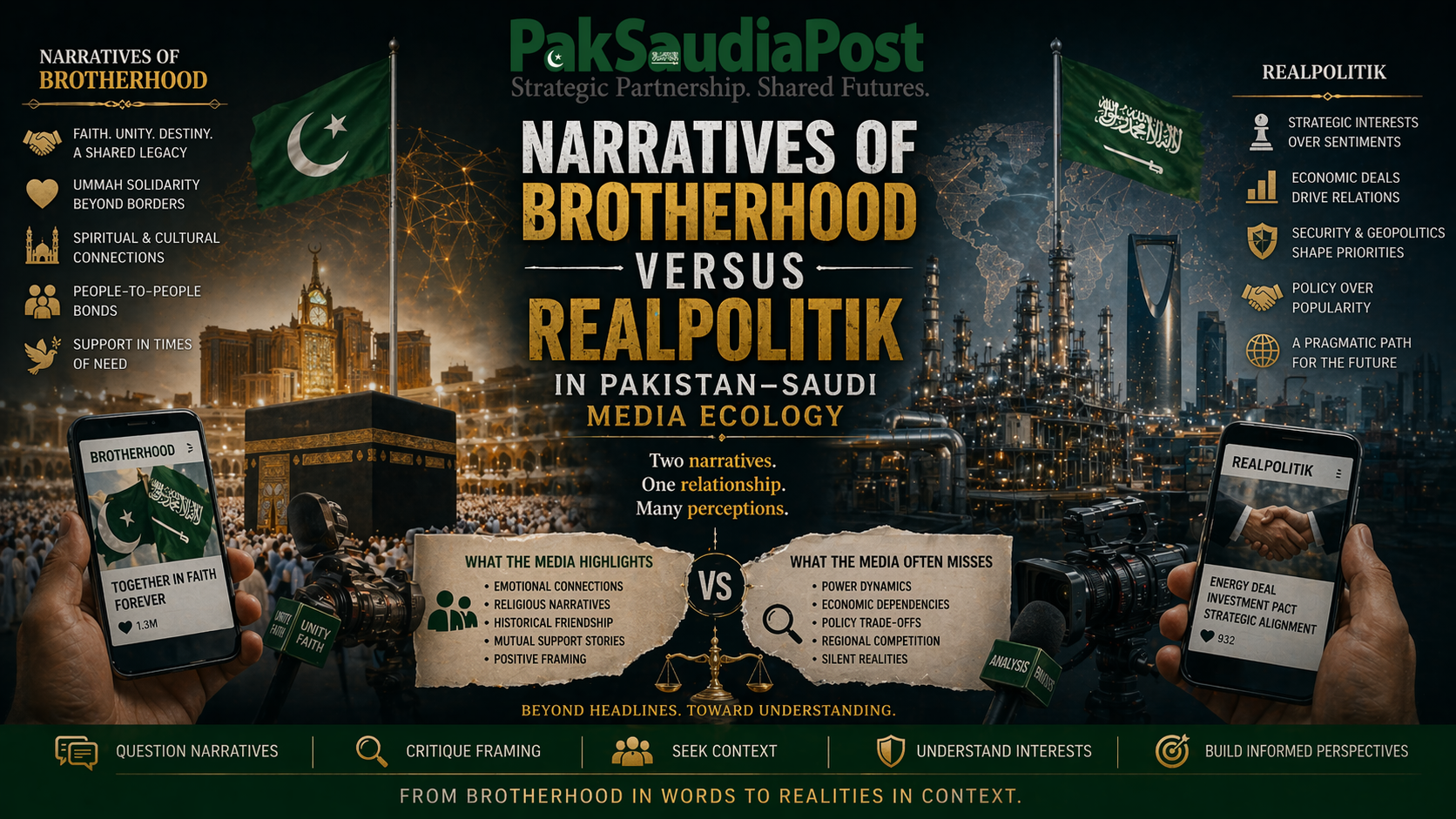
Narratives of Brotherhood Versus Realpolitik in Pakistan–Saudi Media Ecology
The media ecology surrounding Pakistan–Saudi relations is shaped by a persistent tension between emotional narration and strategic calculation, where the language of “brotherhood” operates as both a cultural idiom and a political technology. Across Pakistani and Arab media landscapes, particularly in state-aligned newspapers,
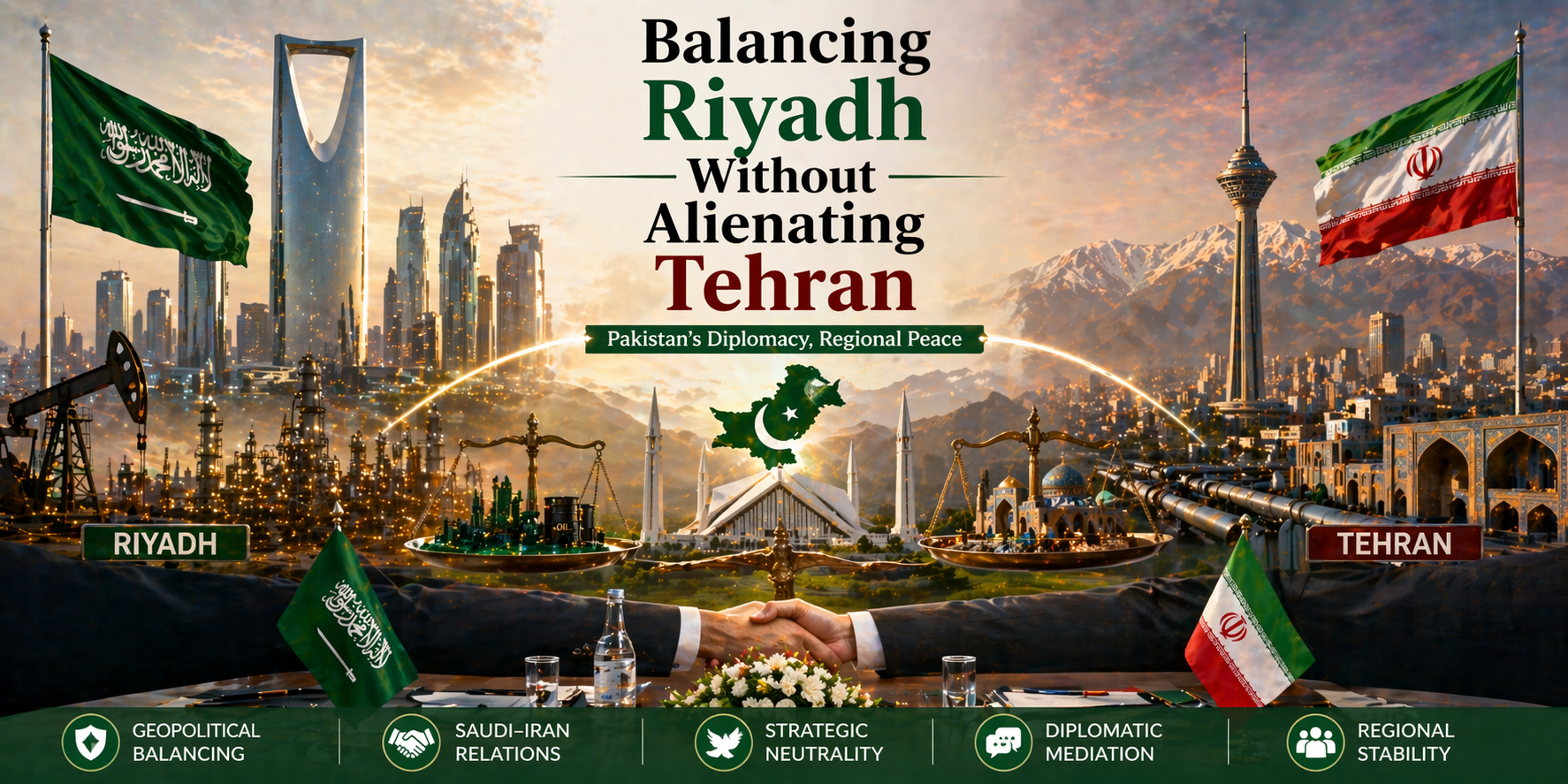
Balancing Riyadh Without Alienating Tehran
Pakistan’s foreign policy has long been described as a study in constrained motion, a state perpetually navigating between necessity and geography, ideology and economics, proximity and patronage. Nowhere is this more visible than in its attempt to balance its ties with Saudi Arabia
Resonance and Authority: Prominence in Digital Discourse as a Vector of Bilateral Influence
In the contemporary strategic landscape, social media has transformed the way nations construct authority, legitimacy, and influence. Pakistan and Saudi Arabia have increasingly relied on digital prominence to project diplomatic discourse, shape public perception, and reinforce strategic alignment. Prominence is not merely visibility;

The Artery of Influence: Pakistan Saudi Energy Corridor and Regional Strategic Leverage
Energy constitutes the lifeblood of modern states. The uninterrupted flow of oil, gas, and refined products underpins national economies, determines industrial productivity, and shapes the balance of power in a region increasingly defined by resource scarcity and strategic competition. Pakistan occupies a geographic

Decline of Proxy Politics in the Middle East
The Middle East has long been characterized by a complex web of proxy conflicts that have shaped the strategic, political, and economic contours of the region. For decades, states have leveraged non-state actors, ideological movements, and indirect interventions to project influence without engaging

Pakistan’s Tightrope: Iran–Saudi Oil Wars and Regional Realignment
Pakistan today stands at a complex crossroads in the Middle East, where regional rivalries, energy politics, and strategic realignments converge in ways that directly affect its security, economy, and foreign policy calculus. The ongoing rupture in OPEC plus agreements, intensified proxy conflicts, and