Governance Fatigue and Administrative Legitimacy in Developing States Today

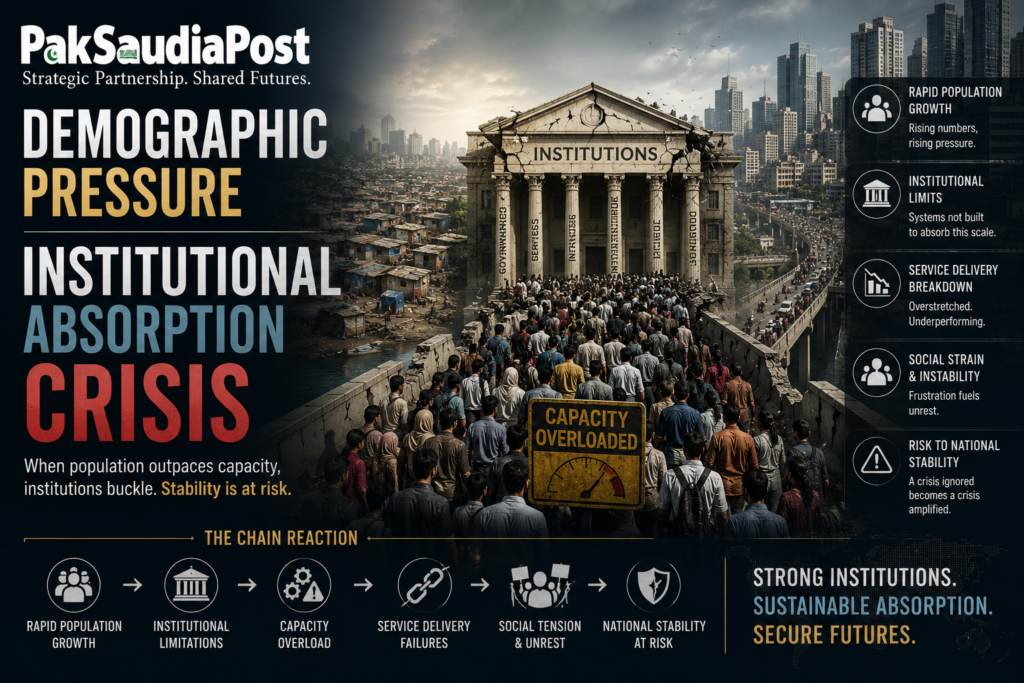
The contemporary condition of governance in many developing states is increasingly defined not by institutional absence but by a slow, cumulative erosion of administrative credibility that operates beneath the surface of formal continuity. Governments continue to function, ministries continue to issue directives, and bureaucratic hierarchies remain visibly intact, yet the relational bond between state capacity and public confidence is undergoing a measurable weakening. This phenomenon, often described in abstract terms as distrust, is more accurately understood as governance fatigue, a structural condition in which citizens and institutions alike begin to lose cognitive and practical alignment with the logic of administrative authority.
This fatigue does not arise from a single rupture. It is produced through layered experiences of procedural delay, inconsistent policy articulation, fragmented communication channels, and a persistent gap between announced reform agendas and their implementation realities. In such environments, legitimacy is no longer derived exclusively from constitutional or ideological foundations but increasingly from the perceived operational competence of the state. The citizen evaluates governance not through abstract claims of representation but through the speed of document processing, the predictability of regulatory interpretation, and the reliability of service delivery mechanisms.
Over time, these micro level interactions accumulate into a macro political sentiment that reshapes the authority structure of the state itself. Bureaucratic systems, originally designed to embody rational efficiency, begin to appear self referential, more concerned with procedural preservation than outcome delivery. The resulting perception is not necessarily that the state is absent, but that it is present in ways that are procedurally heavy and experientially inconsistent. This creates a paradox where institutional density increases while perceived effectiveness declines.
A critical dimension of this transformation lies in policy inconsistency. In many developing governance systems, frequent shifts in administrative direction, often driven by political turnover, fiscal constraints, or external advisory pressures, generate a perception of instability even in areas where institutional continuity is formally maintained. Regulatory frameworks become layered rather than sequential, producing overlapping directives that are difficult to interpret at operational levels. This interpretive ambiguity forces lower tier bureaucracies into discretionary decision making, which in turn deepens perceptions of arbitrariness among citizens.
Within such contexts, public trust becomes increasingly conditional. It is no longer anchored in long term institutional loyalty but in episodic evaluations of service encounters. A single negative interaction with administrative machinery can outweigh multiple prior positive experiences, because the cognitive expectation baseline has already been lowered by repeated exposure to inconsistency. This psychological dimension of governance fatigue is often underestimated in policy discourse, yet it plays a central role in shaping the legitimacy landscape of the state.
The expansion of digital governance platforms, while often presented as a corrective mechanism, has introduced its own set of complexities. Digitisation improves visibility and access in principle, but when layered over structurally inefficient administrative backends, it risks amplifying rather than resolving bottlenecks. Citizens may gain digital entry points to state services, but if backend processes remain slow, fragmented, or opaque, the perception of inefficiency becomes more visible rather than less. In effect, digital interfaces expose institutional weakness at a higher resolution.
From an internal governance perspective, bureaucratic inertia must also be understood not merely as inefficiency but as a rational adaptation to risk heavy administrative environments. In systems where accountability mechanisms are uneven or politically sensitive, procedural caution becomes a survival strategy for mid level officials. This leads to over compliance with rules, excessive documentation, and risk avoidance behaviours that further slow administrative throughput. The system thus enters a self reinforcing cycle where caution produces delay, and delay reinforces distrust.
At the same time, the expectations placed upon the modern state have expanded significantly. Citizens now expect simultaneous delivery of security, welfare, economic stability, and digital convenience, often without corresponding increases in institutional capacity or fiscal flexibility. This expectation gap widens the perception of administrative underperformance even in cases where absolute service delivery may have improved. Governance fatigue therefore emerges not only from failure but also from asymmetry between expectation and execution capacity.
A further structural element is the fragmentation of communication authority. In many governance systems, multiple institutional actors issue overlapping public messages, creating a dissonant informational environment. When policy intent is communicated through inconsistent channels, citizens struggle to construct a coherent understanding of state direction. This informational fragmentation contributes to interpretive instability, where even well designed policies are perceived as uncertain or reversible.
The long term consequence of these dynamics is a shift in the basis of legitimacy itself. Traditional legitimacy frameworks, whether rooted in ideology, historical continuity, or electoral endorsement, are increasingly insufficient to sustain institutional trust in isolation. Instead, legitimacy is becoming operational and performance based, grounded in measurable administrative responsiveness. States that fail to adapt to this shift risk experiencing a gradual decoupling between formal authority and functional credibility.
From a strategic policy perspective, addressing governance fatigue requires more than incremental administrative reform. It demands a structural reorientation of the state towards outcome centric governance architecture. This includes the establishment of real time service delivery monitoring systems that are publicly auditable, the consolidation of fragmented regulatory instruments into coherent policy frameworks, and the reduction of discretionary ambiguity at lower bureaucratic tiers through clearer procedural codification.
Institutionally, there is a need to re engineer bureaucratic incentives so that procedural compliance is balanced with outcome accountability. Current systems often reward adherence to process over delivery of results, thereby incentivising caution over efficiency. A recalibration of performance metrics to include time bound service benchmarks, citizen feedback integration, and inter departmental coordination efficiency would create a more balanced administrative ecosystem.
In parallel, governance communication must be centralised into coherent narrative structures that reduce interpretive fragmentation. This does not imply information control, but rather strategic alignment of messaging across institutions so that policy direction is consistently understood at all levels of implementation. In the absence of such coherence, even well intentioned reforms risk being diluted through communicative inconsistency.
From an internal strategic standpoint, it is also necessary to acknowledge the security dimension of administrative design. In many developing states, governance systems operate under conditions of heightened security sensitivity, which often necessitates layered approval mechanisms and procedural safeguards. However, when security logic becomes overly embedded in civilian administrative processes, it can inadvertently slow service delivery and reinforce perceptions of opacity. A calibrated separation between security protocols and civilian service mechanisms is therefore essential to maintaining both efficiency and trust.
Ultimately, governance fatigue is not a temporary administrative inconvenience but a structural signal of misalignment between state capacity, institutional design, and citizen expectation. It reflects a transition phase in which older legitimacy models are no longer fully effective, yet new performance based models have not been fully institutionalised. This transitional ambiguity creates space for uncertainty, but also for reformulation.
For policymakers operating within this environment, particularly those engaged in strategic governance planning and institutional oversight, the challenge is to move beyond reactive administrative adjustments and towards systemic redesign. This requires a willingness to confront entrenched bureaucratic behaviours, to simplify overly complex regulatory environments, and to invest in institutional transparency as a core governance asset rather than a supplementary feature.
The future stability of administrative legitimacy will depend less on rhetorical assurances and more on the consistent delivery of predictable, transparent, and efficient governance outcomes. States that internalise this shift will likely experience a gradual restoration of trust. Those that do not may find themselves operating within formally intact institutions that have progressively weakened in functional authority, a condition in which governance exists in structure but not in confidence.
A Public Service Message