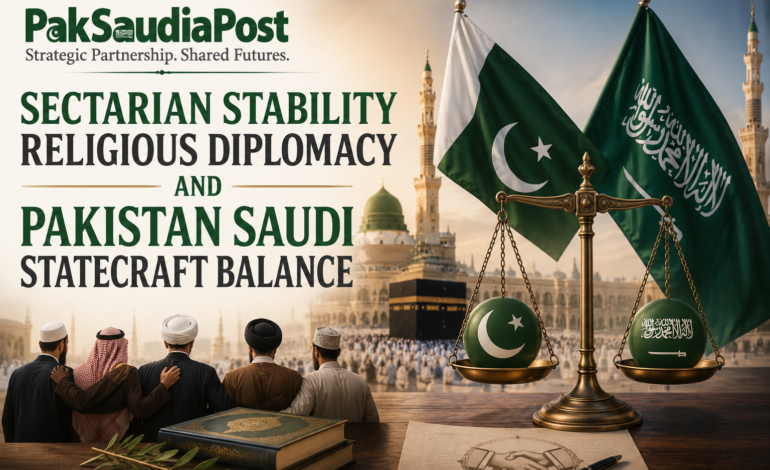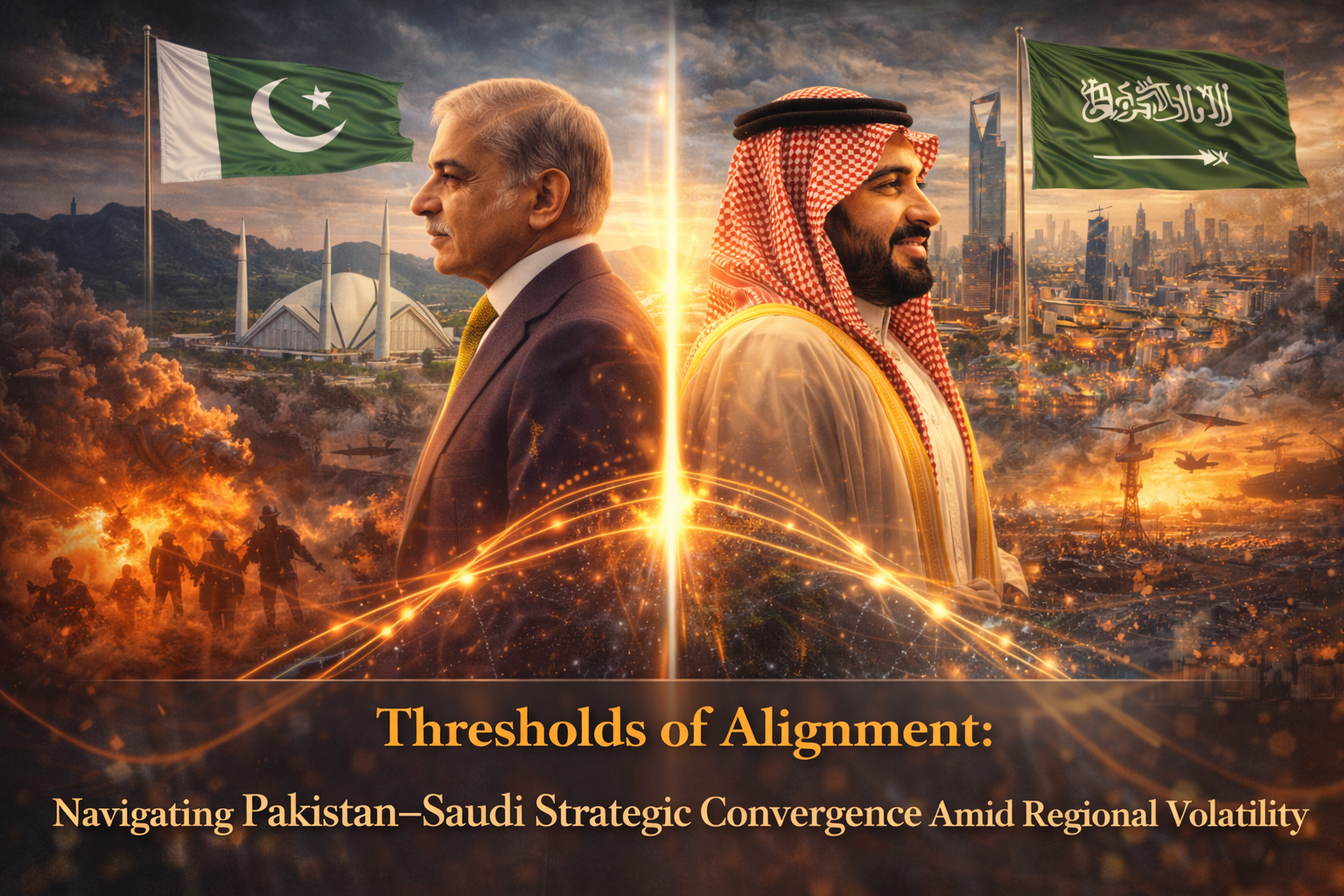
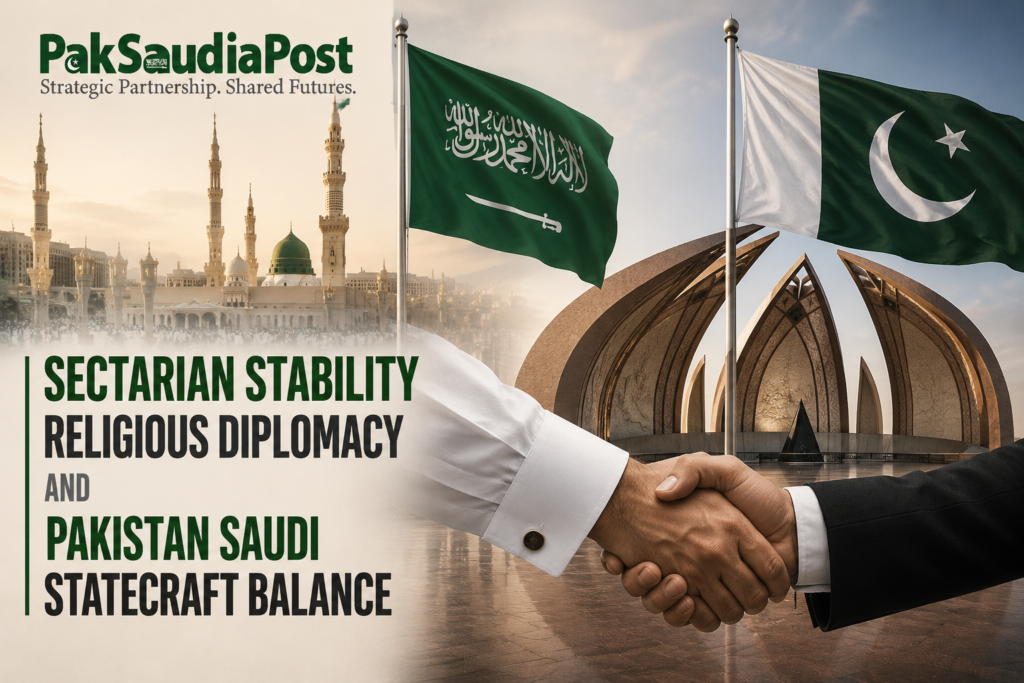
Sectarian Stability Religious Diplomacy and Pakistan Saudi Statecraft Balance

In the contemporary recalibration of Muslim world geopolitics, the relationship between Pakistan and Saudi Arabia occupies a uniquely sensitive intellectual and strategic space, one that is neither reducible to conventional alliance politics nor fully explainable through doctrinal affinity alone. It is instead a continuously negotiated equilibrium between theological symbolism, state sovereignty, domestic sectarian diversity, and the increasingly volatile informational ecosystems that now shape religious identity across borders. The management of sectarian sensitivity has therefore become not an auxiliary concern of bilateral diplomacy but one of its central organizing principles, quietly embedded in the architecture of statecraft that both Islamabad and Riyadh have refined over decades of engagement and recalibration.
At the heart of this equilibrium lies a paradox. Both states derive significant legitimacy from their association with Islamic identity, yet both must simultaneously prevent the politicization of sectarian interpretation from destabilizing internal cohesion or external partnerships. Saudi Arabia’s custodianship of the two holy mosques places it at the symbolic center of Sunni Islamic imagination, while Pakistan’s constitutional identity as an Islamic republic embeds religion within the grammar of statehood itself. However, these symbolic positions carry inherent risk when translated into transnational ideological expectations, particularly in a region where sectarian identities have periodically been instrumentalized by both state and non state actors.
The evolution of Pakistan Saudi relations in the post Cold War and post Arab Spring environment reflects a gradual shift from ideologically charged proximity to pragmatically moderated engagement. This transformation has been driven by multiple converging pressures, including Saudi Arabia’s internal recalibration of religious discourse under its broader economic and social reform agenda, Pakistan’s persistent need to stabilize its diverse sectarian landscape, and the wider regional exhaustion with proxy conflicts that once defined Middle Eastern and South Asian political theatres. The resulting diplomatic posture is one of managed ambiguity, where religious affinity is acknowledged but carefully de politicized in official narratives.
In practical terms, sectarian stability between the two countries is maintained through a multilayered framework of institutional restraint, informal clerical diplomacy, and calibrated public messaging. Religious exchanges are structured to emphasize shared civilizational values rather than doctrinal contestation. Scholarly delegations, interfaith dialogues, and state sanctioned religious conferences function as soft power instruments that reinforce a controlled narrative of unity. At the same time, both states maintain quiet vigilance over transnational clerical networks and ideological flows that could amplify sectarian polarization beyond manageable thresholds.
Yet the challenge of maintaining this balance has intensified in the digital age. The fragmentation of religious authority across social media platforms has fundamentally altered the ecology of sectarian discourse. Where once religious interpretation was mediated through formal institutions, it is now increasingly shaped by decentralized influencers, algorithmically amplified content, and emotionally charged narratives that transcend geographical boundaries. This informational volatility complicates traditional state efforts to regulate religious messaging and introduces new uncertainties into bilateral coordination.
Within Pakistan, sectarian diversity is both a source of cultural plurality and a potential vector of internal tension. The state has historically oscillated between periods of active regulation and strategic ambiguity in managing sectarian expression. Saudi Arabia, meanwhile, has in recent years undertaken significant efforts to centralize religious authority and moderate ideological exportation, reflecting a broader shift toward state controlled religious discourse. These parallel trajectories have created a degree of convergence in approach, even if underlying historical and doctrinal sensitivities remain structurally present.
The diplomatic language that now characterizes Pakistan Saudi engagement increasingly avoids explicit sectarian framing, instead privileging terms such as moderation, stability, and Islamic unity. This linguistic shift is not merely rhetorical but strategic, reflecting a conscious effort to construct a post sectarian vocabulary of cooperation. However, the durability of this narrative depends on its capacity to withstand episodic shocks generated by regional crises, geopolitical rivalries, or localized sectarian incidents that can rapidly acquire transnational resonance.
One of the most significant undercurrents shaping this relationship is the gradual emergence of what might be described as managed pluralism within Islamic statecraft. Rather than seeking to eliminate doctrinal diversity, both Pakistan and Saudi Arabia appear increasingly invested in regulating its political expression. This involves not only state oversight of religious institutions but also the cultivation of interpretive flexibility within official discourse. The objective is not theological homogenization but political stabilization, a distinction that is often overlooked in external analyses of the region.
At a structural level, the Pakistan Saudi partnership operates within a broader regional environment marked by shifting power alignments, economic uncertainty, and ideological recalibration. Saudi Arabia’s Vision driven transformation agenda has reoriented its global engagement toward economic diversification and geopolitical pragmatism, while Pakistan continues to navigate the complexities of economic stabilization, demographic pressure, and security challenges. Within this context, sectarian stability becomes not an isolated religious issue but a component of broader state resilience.
The management of religious diplomacy between the two countries therefore functions as a form of strategic insulation. It seeks to ensure that ideological narratives do not destabilize economic cooperation, labor migration flows, or security coordination. Millions of Pakistani expatriates in the Gulf region further intensify the importance of maintaining this equilibrium, as their presence embeds sectarian sensitivity within the everyday functioning of bilateral relations.
Despite these mechanisms of control, the underlying fragility of sectarian balance cannot be entirely eliminated. It is periodically tested by external shocks, including regional conflicts, shifts in global energy politics, and the re emergence of identity based mobilization in various parts of the Muslim world. Each of these factors has the potential to re activate dormant tensions or introduce new interpretive contestations into the bilateral space.
Policy responses from both sides have increasingly focused on institutional resilience rather than ideological containment. This includes strengthening regulatory oversight of religious education institutions, enhancing cross border intelligence cooperation on extremist financing networks, and investing in digital monitoring capacities capable of tracking online radicalization pathways. However, these measures are inherently reactive unless accompanied by a more proactive narrative strategy that addresses the root causes of sectarian susceptibility.
A critical dimension of this strategy involves re conceptualizing religious identity as a source of ethical convergence rather than political divergence. This requires a shift from identity based securitization to values based integration, where shared principles of social justice, community welfare, and ethical governance are emphasized over doctrinal distinctions. Such a reframing is already visible in limited form within official discourse, but it remains unevenly institutionalized and vulnerable to reversal under political pressure.
Another emerging challenge is the generational transformation of religious perception. Younger populations in both Pakistan and Saudi Arabia are increasingly exposed to globalized cultural and informational flows that dilute traditional sources of religious authority. This generational shift introduces both risks and opportunities. On one hand, it may reduce susceptibility to sectarian mobilization. On the other, it may also erode established frameworks of religious cohesion, creating a vacuum that can be filled by alternative ideological constructs.
In this context, the role of state guided religious diplomacy becomes even more critical. It must evolve from a primarily symbolic function into a substantive mechanism for shaping interpretive ecosystems. This includes investment in transnational educational initiatives, collaborative scholarly platforms, and moderated digital content ecosystems that can provide credible alternatives to extremist narratives without resorting to coercive censorship.
Ultimately, the Pakistan Saudi model of sectarian stability is neither static nor guaranteed. It is a dynamic equilibrium sustained through continuous adjustment, institutional vigilance, and narrative discipline. Its success depends not on the elimination of difference but on the capacity to manage it within politically and socially acceptable boundaries. As regional and global conditions continue to evolve, this balancing act will likely become more complex, requiring increasingly sophisticated forms of diplomatic, technological, and ideological coordination.
The broader implication for policymakers is that sectarian stability can no longer be treated as a peripheral concern of religious affairs ministries or security agencies alone. It must be integrated into the core architecture of foreign policy, economic planning, and digital governance. Only through such holistic integration can Pakistan and Saudi Arabia sustain a bilateral relationship that remains resilient in the face of both internal diversity and external volatility, preserving stability not as a temporary achievement but as an ongoing strategic discipline.
A Public Service Message