Ethics of Patronage and Sovereignty


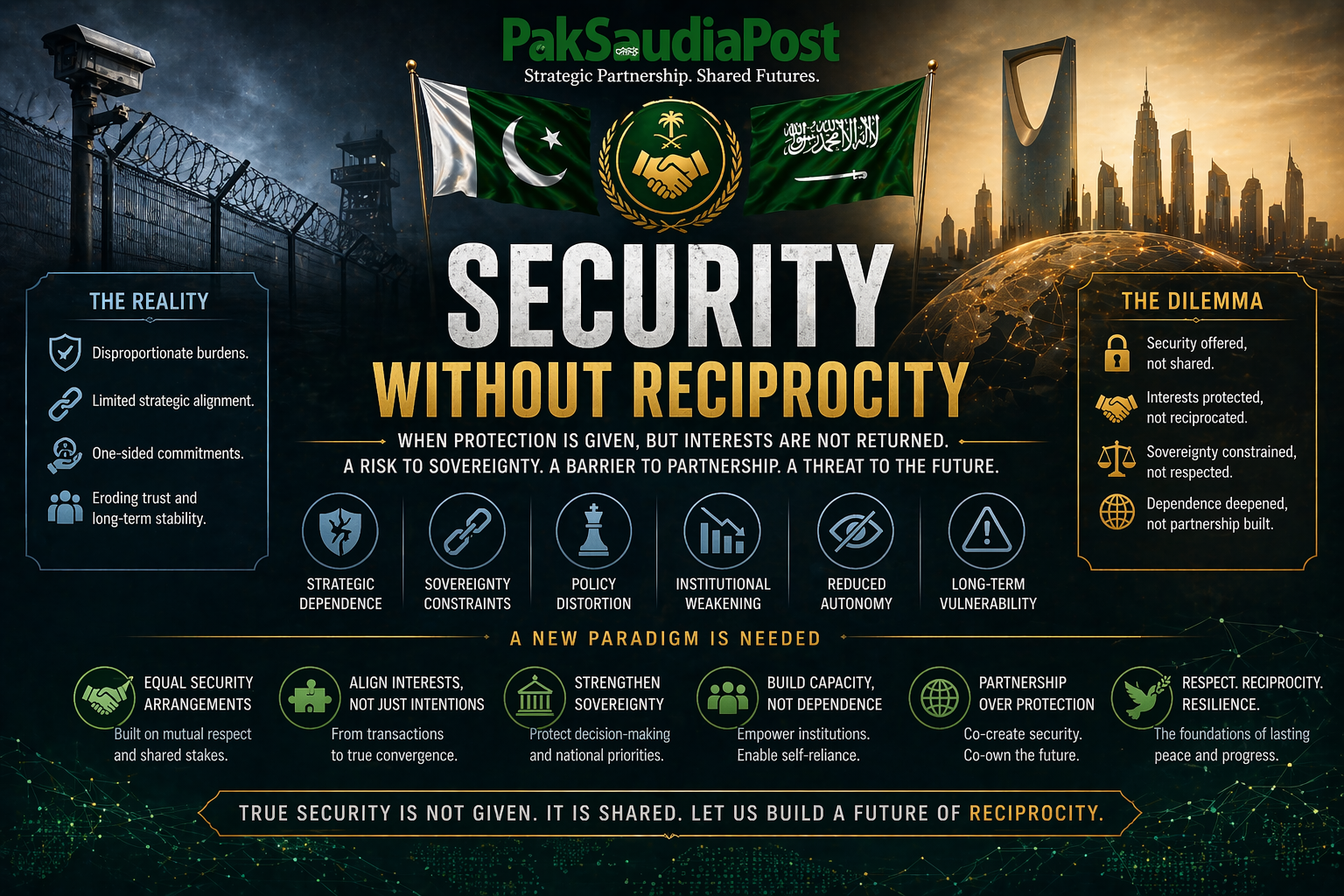
The moral and philosophical dilemma of external financial rescue in Pakistan cannot be reduced to the technical vocabulary of balance-of-payments support or cyclical IMF stabilization mechanisms. It belongs instead to a deeper genealogy of sovereignty itself, where the modern statesespecially in post-colonial formations, exists not as an autonomous unit but as a structurally interdependent organism whose survival is often mediated through external liquidity regimes. The ethical question, therefore, is not simply whether financial rescue is justified, but whether repeated rescue transforms sovereignty from a juridical principle into a managed condition of dependency, perpetually sustained yet perpetually incomplete.
In classical political theory, sovereignty is imagined as indivisible authority over territory, population, and decision-making. Yet this conception assumes a correspondence between political control and economic capacity that does not hold in structurally unequal global systems. In Pakistan’s case, sovereignty has always been negotiated through a triangulation of external financing, domestic fiscal fragility, and geopolitical positioning. This triangulation produces a form of sovereignty that is formally intact but substantively porous. The state retains symbols of autonomy—flag, constitution, military command—but its fiscal bloodstream is intermittently regulated by external actors whose liquidity decisions determine domestic policy space.
From a post-colonial theoretical perspective, this condition reflects not a failure of sovereignty but its historical deformation. The colonial economy was not designed for autonomous reproduction but for extractive integration into imperial circuits. After independence, the institutional skeleton of governance remained, but the economic musculature required for self-sustaining sovereignty was never fully developed. The result is a persistent structural dependency that external financial rescue mechanisms do not create but stabilize. In this sense, patronage is not an external intrusion; it is an inherited condition that has been normalized into the architecture of governance.
However, the ethical tension emerges when stabilization becomes repetition. A single episode of external assistance can be interpreted as humanitarian intervention in economic distress. But repeated cycles of rescue generate a different moral ontology: dependency ceases to be episodic and becomes structural. At this point, external financial support is no longer an emergency measure; it becomes an informal governance mechanism. Sovereignty is not formally revoked, but its operational autonomy is continuously conditioned by external approval structures.
This dynamic can be interpreted through what might be called the moral economy of conditionality. Conditionality is not merely a set of policy requirements; it is a disciplinary framework that reorganizes state behavior in anticipation of external judgment. Over time, this creates a subtle transformation in decision-making rationality. Policymakers begin to internalize external expectations as part of their own strategic calculus. The state does not simply respond to conditions; it begins to pre-empt them. This is what can be described as anticipatory governance under dependency.
The ethical paradox lies in the dual consequences of this structure. On one hand, external financial rescue prevents systemic collapse, averts hyperinflationary spirals, and maintains macroeconomic stability. From a consequentialist perspective, such interventions are morally defensible because they minimize immediate harm. On the other hand, if the same interventions contribute to the perpetuation of structural vulnerability, then they generate a cyclical dependency that undermines long-term autonomy. The moral act of rescue thus becomes entangled with the moral hazard of repetition.
This paradox cannot be resolved within a purely economic framework because it is fundamentally philosophical. It concerns the ontology of agency under constraint. When a state’s policy space is repeatedly shaped by external liquidity conditions, its sovereignty becomes performative rather than substantive. It acts sovereign, speaks sovereign, and negotiates sovereign, but the boundaries of its choices are externally calibrated. Sovereignty becomes a language of autonomy spoken within a grammar of dependency.
The ethical implications extend further when we consider the asymmetry of responsibility between donor and recipient. In liberal humanitarian discourse, the donor is often framed as benevolent actor and the recipient as vulnerable subject. Yet this framing obscures the structural interdependence that produces vulnerability in the first place. The donor is not external to the system of dependency; it is constitutive of it. Through financial architecture, credit rating systems, and geopolitical alignments, external actors participate in the reproduction of the very instability they later stabilize.
This is where the concept of managed sovereignty becomes analytically useful. Managed sovereignty refers to a condition in which a state retains formal independence but operates within externally defined economic corridors. These corridors are not always coercive; they are often consensual, negotiated, and even strategically beneficial in the short term. Yet their cumulative effect is to narrow the horizon of autonomous policy experimentation. The state is not forced into dependency; it is gradually acclimatized to it.
Historically, Pakistan’s engagement with external financial rescue has oscillated between emergency stabilization and strategic alignment. Each cycle of assistance carries within it both relief and recalibration. Relief comes in the form of immediate fiscal space; recalibration comes in the form of policy restructuring aligned with external expectations. Over time, this cyclical pattern produces what might be described as institutional memory of dependency. Bureaucratic systems begin to anticipate the next cycle of assistance as part of normal fiscal planning.
Ethically, this raises the question of whether sovereignty can be morally preserved if it is structurally conditioned. One possible argument is that sovereignty is not absolute but relational; it exists through interdependence rather than isolation. From this perspective, external financial rescue does not violate sovereignty but expresses its interconnected nature. However, this relational interpretation becomes problematic when interdependence is asymmetrical and recurrently unidirectional in terms of policy influence.
Another perspective draws on critical political economy, which suggests that dependency is not merely economic but epistemic. It shapes how states imagine their own limitations. When external rescue becomes habitual, it alters the cognitive map of governance. Fiscal constraints are no longer perceived as solvable through internal reform alone but are externalized as structural inevitabilities. This epistemic shift is perhaps the most profound ethical consequence, because it reconfigures the imagination of possibility itself.
The metaphor of life support is often used to describe such situations, but it is insufficiently precise. Life support implies temporary suspension of natural function until recovery is possible. In the case of persistent financial dependency, however, there is no clear transition from support to autonomy. The system stabilizes in a liminal state where survival is continuous but self-sufficiency remains deferred. Sovereignty, in this condition, resembles a patient who is never declared either cured or terminally dependent.
The moral ambiguity intensifies when we consider that external financial rescue is rarely disinterested. It is embedded within geopolitical calculations, trade alignments, and strategic partnerships. Thus, the ethics of patronage cannot be separated from the geopolitics of influence. Financial assistance is simultaneously humanitarian and strategic, stabilizing and directive. This duality complicates any simple moral evaluation.
Ultimately, the ethics of patronage in Pakistan’s case cannot be resolved through binary judgments of good or bad, autonomy or dependency. It must instead be understood as a structural condition of global political economy in which sovereignty is continuously negotiated rather than fully possessed. The moral challenge is not to eliminate dependency—an impossible task in an interdependent world—but to transform it from asymmetrical repetition into more balanced forms of mutual constraint and shared vulnerability.
In this sense, the future of sovereignty may not lie in escaping patronage but in reimagining its terms: shifting from unidirectional rescue to reciprocal resilience, from conditional stabilization to co-constructed economic architecture, and from managed dependency to negotiated interdependence.
A Public Service Message