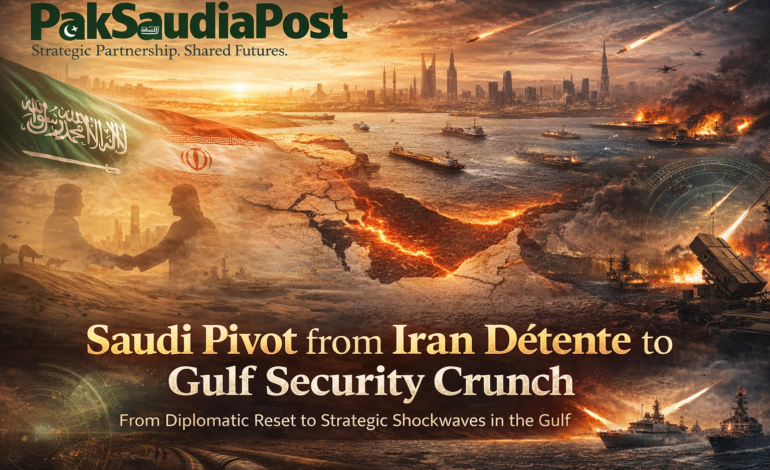
Saudi Pivot from Iran Détente to Gulf Security Crunch

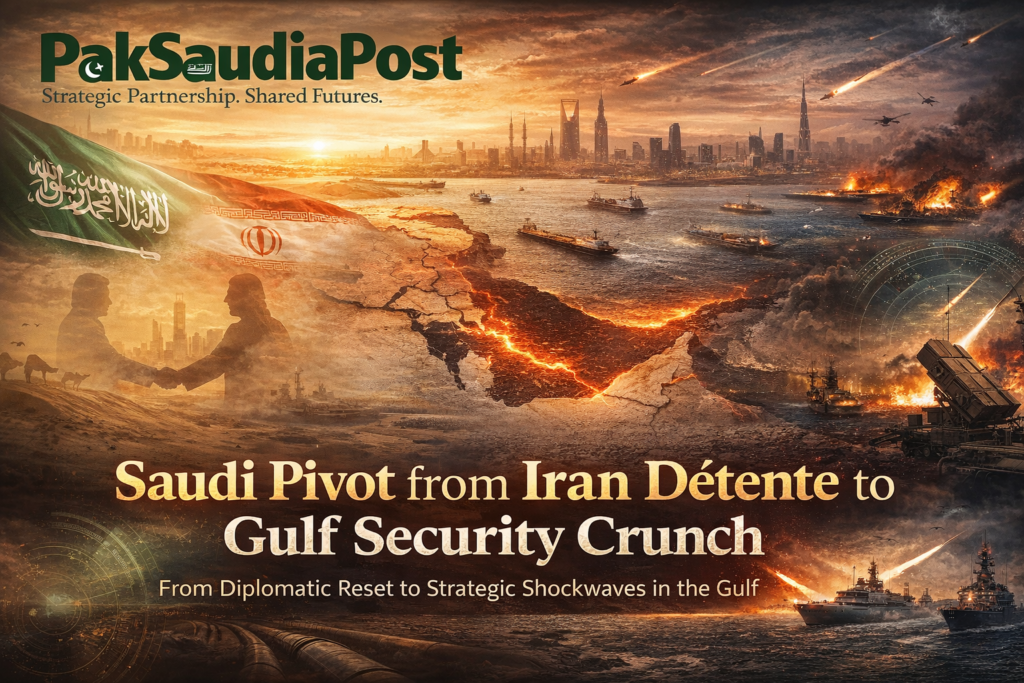
Saudi Arabia’s strategic calculus in early 2026 has undergone a profound transformation, reflecting intensifying insecurity along both its northern and southern frontiers. The recent surge in Houthi drone attacks, concentrated on the southern provinces and energy infrastructure, has rendered the previous détente posture toward Tehran increasingly untenable. Riyadh’s approach, which had been characterized by selective engagement with Iran, including intermittent dialogue and temporary halts of proxy escalation, now appears subordinated to an urgent imperative: fortifying the Kingdom’s regional security envelope. This shift encapsulates multiple layers of geopolitical and economic concern, extending from the immediate operational threat of asymmetric attacks in Yemen to the broader architecture of Gulf power projection, which includes the orchestration of United States aligned arms modernization programs and strategic maritime contingencies in the Strait of Hormuz.
The erosion of Saudi–Iranian rapprochement is emblematic of the volatility inherent in Middle Eastern geostrategic interdependence. Historically, Riyadh’s engagement with Tehran served both as a mechanism to stabilize oil markets and to mitigate exposure to asymmetric conflict along the Arabian Peninsula’s southern flank. Yet the contemporary security landscape has rendered this balance precarious. Houthi operations, increasingly sophisticated and underpinned by apparent Iranian technological support, have demonstrated a striking capacity to disrupt civilian infrastructure and energy supply chains alike. Consequently, Riyadh’s recalibration reflects not merely a reactive posture but a conscious strategic acknowledgment that détente cannot coexist with credible kinetic threats to core national assets.
The immediate implications of this pivot extend into the global energy economy. OPEC plus coordination, which has historically depended on cautious Saudi–Iranian alignment, now faces renewed uncertainty. Riyadh’s recalibration may induce defensive hedging in production quotas, potentially prioritizing market stability over diplomatic accommodation with Tehran. For Pakistan, a nation intricately linked to Saudi energy policy through direct imports and financial cooperation, such volatility introduces tangible risks. The potential for asymmetric energy shocks, compounded by regional maritime vulnerabilities, accentuates Islamabad’s reliance on diversified supply routes, including Red Sea alternatives, to mitigate exposure from Hormuz contingencies.
Strategically, Riyadh’s engagement with Washington has entered a new phase. The acceleration of United States arms transfers, including advanced missile defense systems and aerial reconnaissance platforms, reflects a mutual recognition of evolving asymmetric threats. These deployments are not merely defensive; they also signal a recalibrated deterrent posture toward Tehran’s regional proxies. From the perspective of Pakistani defense considerations, the Saudi commitment to hardening its security apparatus is consequential. Islamabad, as a formal defense partner under bilateral agreements, finds itself intertwined in a regional security nexus that now demands heightened vigilance, both in intelligence sharing and in the protection of Pakistani personnel and interests across the Gulf.
The Yemen theater continues to serve as a crucible of this strategic tension. The escalation of drone and missile attacks, likely facilitated through Iranian logistical support, underscores the complexity of Riyadh’s operational environment. The Kingdom’s military doctrine, which has traditionally relied on conventional superiority, is now compelled to integrate counter-asymmetric strategies that blend technological investments with nuanced diplomacy. This operational shift inevitably influences regional alliances and compels Gulf neighbors to reassess force postures and the reliability of cross-national intelligence frameworks. Pakistan, given its expatriate workforce in Saudi Arabia and historical defense collaboration, becomes both a stakeholder and potential facilitator in these emerging strategies.
Beyond kinetic considerations, Riyadh’s pivot carries profound diplomatic reverberations. Iran, acutely aware of Saudi recalibration, must navigate a dual dilemma, namely sustaining its regional influence while avoiding overt escalation that could jeopardize ongoing nuclear and trade negotiations. The fragile architecture of Gulf cooperation, often mediated by extraregional actors such as the United States and multilateral financial institutions, is thereby exposed to heightened friction. Pakistan’s foreign policy calculus, which must balance historic ties with both Riyadh and Tehran, faces consequential pressures. The Islamabad administration is tasked with crafting a diplomatic posture that acknowledges Riyadh’s security prerogatives while preserving engagement channels with Tehran. This balancing act is complicated by regional economic dependencies, energy security imperatives, and the pervasive influence of United States strategic priorities.
The economic dimensions of Saudi security recalibration are inseparable from strategic considerations. Riyadh’s hardening stance implies increased allocation of state resources toward defense modernization and infrastructure resilience, which may affect fiscal space for domestic socio-economic programs under Vision 2030. Such dynamics bear implications for Pakistan’s labor and remittance flows, particularly given the Kingdom’s role as a primary employer of overseas Pakistani workers. A contraction in discretionary spending or the emergence of domestic unrest could cascade into reduced employment opportunities and delayed remittance inflows, adding a socio-economic dimension to Islamabad’s strategic calculations.
On the nuclear front, while Riyadh has not signaled overt militarization, the intensification of regional rivalries underscores latent concerns regarding strategic proliferation. Any perception of instability or escalating conflict increases the salience of nuclear hedging among regional actors. For Pakistan, the security calculus is compounded by its own nuclear posture, which must remain calibrated to regional shifts without triggering adversarial escalation. Strategic signaling, intelligence sharing, and proactive diplomacy become imperative instruments to manage both deterrence stability and alliance cohesion.
In the maritime domain, the Strait of Hormuz continues to represent a potential flashpoint. Saudi efforts to diversify export channels, including intensified utilization of Red Sea ports such as Yanbu, reflect a proactive mitigation strategy. For Pakistan, energy security considerations dictate both close monitoring of shipping routes and coordination on potential contingency measures to secure fuel imports. The interplay of regional naval deployments, proxy engagement in Yemen, and asymmetric threats from non-state actors underscores a multi-vector security environment that defies simplistic binary categorizations.
The Saudi pivot carries broader geostrategic resonance in the context of Gulf power architecture. By decisively prioritizing hard security over diplomatic engagement with Iran, Riyadh signals to the Gulf Cooperation Council and the wider Middle East a readiness to assert primacy in regional conflict management. This posture exerts both constraining and enabling effects on neighboring states, constraining them by raising the stakes of proxy engagements and maritime vulnerability, and enabling them by opening avenues for coordinated defense frameworks among aligned states. Pakistan, situated at the confluence of these dynamics through historical defense collaboration and strategic partnerships, must anticipate secondary effects ranging from alignment pressures to intelligence-sharing imperatives.
The nuanced dimension of this strategic pivot lies in its intersection with multilateral economic and political interests. Saudi Arabia’s repositioning is not merely defensive; it signals a recalibration of influence, an assertion of regional hegemony conditioned by asymmetric threats, energy leverage, and diplomatic signaling. For Pakistan, interpreting this posture requires a granular understanding of Saudi domestic politics, regional alliance structures, and the mechanics of Gulf energy markets. The Kingdom’s renewed focus on security readiness, while constraining its flexibility in détente negotiations, presents Islamabad with both challenges and opportunities. These include challenges in navigating heightened tensions with Tehran and opportunities in reinforcing bilateral defense and economic partnerships under the umbrella of shared strategic interests.
In conclusion, Saudi Arabia’s abandonment of Iran détente is emblematic of a broader geostrategic calculus that integrates immediate threat mitigation with longer-term structural considerations encompassing energy, defense, and regional influence. For Pakistan, the implications are multi-layered and complex, including heightened security responsibility under bilateral pacts, increased exposure to Gulf energy volatility, and nuanced diplomatic maneuvering between competing regional imperatives. The Kingdom’s pivot underscores the intricate entanglement of geostrategy, economics, and politics in the Gulf, reinforcing the necessity for Islamabad to adopt a calibrated, anticipatory posture in managing its enduring partnership with Riyadh amid a rapidly evolving Middle Eastern security paradigm.
A Public Service Message