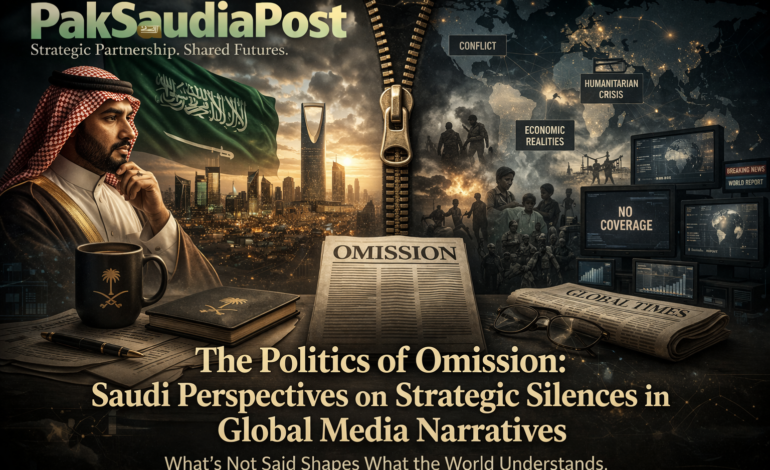
The Politics of Omission: Saudi Perspectives on Strategic Silences in Global Media Narratives

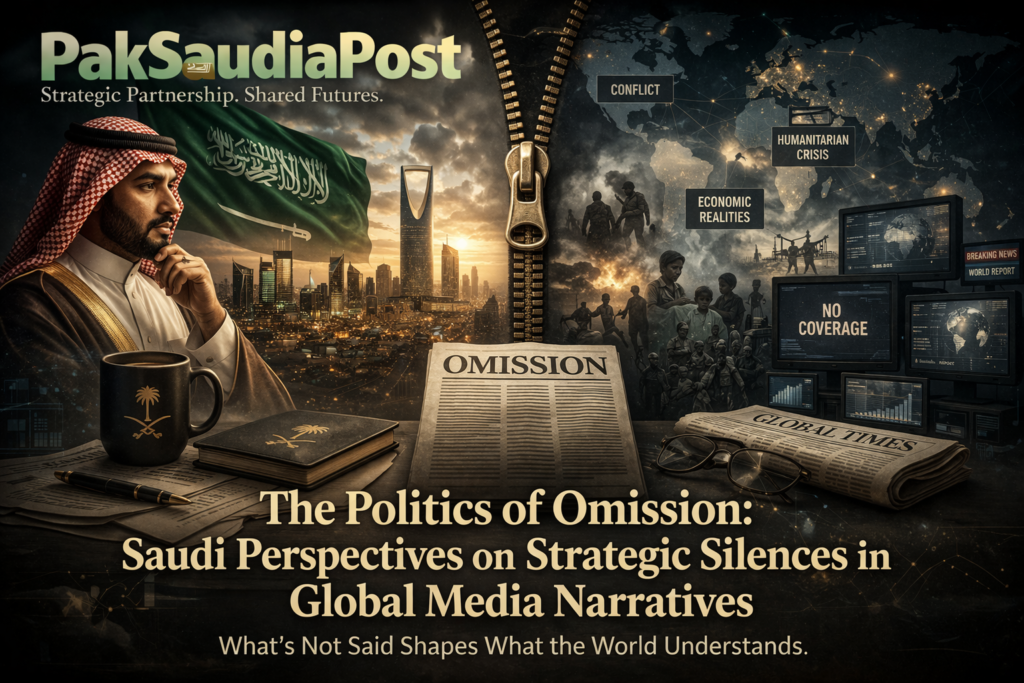
From the perspective of Saudi Arabia, understanding the dynamics of international media coverage is inseparable from the imperatives of regional security, energy stability, and strategic influence. The islands of Abu Musa and Greater Tunb, located at the entrance to the Strait of Hormuz, exemplify a domain where operational reality and media representation diverge significantly. Though these islands occupy scarcely twenty-five square kilometers in total, their strategic importance cannot be overstated. Every vessel transporting oil and gas through the Strait passes within striking range of these territories, which host military installations, advanced missile systems, and integrated surveillance networks capable of influencing maritime traffic and regional deterrence calculations. Despite this operational significance, global media coverage is episodic, often superficial, and filtered through external perspectives that prioritize disputes over systemic relevance. For Saudi Arabia, this selective silence represents both a challenge and an opportunity. The Kingdom must understand the structural, political, and cognitive forces that shape global narratives while asserting its own voice to ensure that strategic realities are accurately represented and global perceptions are informed by regional expertise.
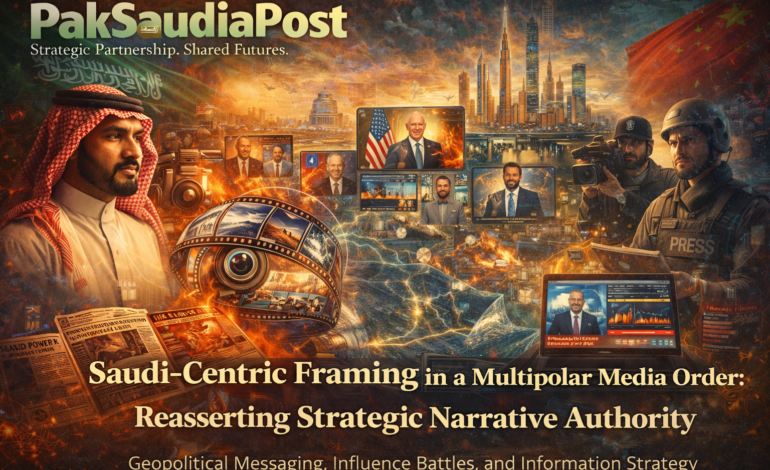
Omission in international media is never neutral. What is left unreported communicates implicit priorities, underlying biases, and tacit assessments of threat and relevance. Media organizations operate under constraints of attention, audience engagement, corporate imperatives, and ideological alignment, which collectively influence which stories receive prominence. In the case of Abu Musa and Greater Tunb, reporting is reactive, episodic, or framed narrowly through the lens of sovereignty disputes, often obscuring operational, economic, and systemic significance. These islands are frequently marginalized in global discussions of Gulf security, overshadowed by crises in Iraq, Syria, Yemen, or by the broader contest between the United States and Iran. The selective neglect of Abu Musa and Greater Tunb is neither accidental nor inconsequential. It reflects hierarchies of information and demonstrates how media omission functions as a subtle form of narrative power. By shaping perceptions of importance and risk, silence in reporting influences policy assumptions, investor calculations, and public awareness without the need for explicit statements.
Saudi Arabia, as a leading Gulf state with a central role in regional energy supply, faces direct consequences from this omission. The lack of sustained analytical coverage undermines global comprehension of vulnerabilities in maritime energy flows. The Strait of Hormuz is one of the most critical chokepoints in the world, and any disruption originating from Abu Musa or Greater Tunb, whether through deliberate action, miscalculation, or accident, could trigger cascading effects on oil prices, shipping insurance, and the reliability of global energy supply chains. Limited coverage delays or diminishes policy responsiveness, reducing the capacity of international actors to anticipate risks, engage diplomatically, or support preventive measures. Furthermore, marginalization of Gulf narratives allows external actors to dominate the discourse, defining the strategic significance of the islands according to their own frameworks rather than those informed by Saudi or regional expertise. This imbalance reinforces the imperative for Saudi media and institutions to reclaim narrative authority and provide coherent, evidence-based insight into maritime operational realities.
Cognitive biases in global audiences contribute further to the politics of omission. International news consumption is often guided by salience heuristics, which favor dramatic, immediate, and visually compelling stories. Abu Musa and Greater Tunb, despite their systemic importance, do not generate the spectacle or immediate human-interest drama that drives global engagement metrics. Their significance is latent, operational, and strategic rather than sensational. Audiences conditioned to respond to episodic crises may perceive detailed coverage of micro-territorial control as abstract or inaccessible. This consumption pattern informs editorial decisions, perpetuating the cycle of omission and leaving critical strategic leverage opaque. Saudi media, by contrast, can leverage proximity, technical expertise, and operational insight to convey the significance of these territories to both regional and international audiences, translating latent operational importance into accessible analysis that informs policy, investment, and security considerations.
Structural asymmetries in global media ownership reinforce the dynamics of omission. Major international news organizations are concentrated in Western capitals, where editorial priorities reflect domestic audience interests, geopolitical alignments, and corporate imperatives. Stories that align with these priorities are amplified, while region-specific insights are often subordinated. Coverage of Abu Musa and Greater Tunb is mediated through external lenses that privilege symbolic sovereignty disputes, diplomatic tension, or episodic conflict. Operational, logistical, and strategic dimensions receive limited attention, filtered through narrative frameworks that prioritize political drama over systemic analysis. This structural reality demonstrates that omission is not simply a matter of editorial choice but reflects global hierarchies of knowledge and narrative authority, within which Saudi Arabia and other Gulf states must assert themselves to ensure accurate representation of regional dynamics.
The consequences of sustained omission are multidimensional and directly affect Saudi strategic interests. First, the lack of global awareness of operational vulnerabilities along the Strait of Hormuz diminishes the capacity for timely and informed decision-making in energy markets. The Kingdom’s role as a primary energy supplier magnifies the importance of reliable maritime transit, and gaps in understanding can translate into volatility in pricing, insurance, and supply management. Second, omission constrains diplomatic and security responses. International actors who are unaware of operational realities may underestimate the risks associated with micro-territorial control, delaying coordinated preventive measures or miscalculating responses to incidents. Third, the marginalization of Gulf perspectives limits regional capacity to shape discourse in international forums. By default, external narratives dominate, framing the assessment of risk and relevance in ways that may diverge from operational realities understood by Saudi policymakers and security planners.
Silence in media, when analyzed strategically, functions as both absence and presence. What is not reported communicates implicit messages about priorities, perceived threats, and strategic significance. For instance, limited reporting on radar upgrades, missile deployment, and operational coordination on Abu Musa and Greater Tunb tacitly signals to international audiences that such developments are peripheral or contained, even when operational reality indicates otherwise. Recognizing the strategic function of omission enables Saudi actors to interpret both what is stated and what is left unsaid in global discourse. It underscores the importance of narrative literacy, scenario modeling, and proactive communication to ensure that strategic realities are not misrepresented or overlooked.
Saudi Arabia’s response to the politics of omission must involve a combination of content production, distribution strategies, and institutional support to enhance narrative authority. High-quality, data-driven analytical reporting that integrates technical expertise, scenario analysis, and historical context establishes credibility and conveys operational significance. Saudi media outlets and think tanks can leverage proximity and access to operational information to offer perspectives unavailable to external observers. Strategic distribution through partnerships with international academic institutions, specialized media platforms, and think tanks amplifies reach and reinforces the Kingdom’s voice in global discourse. By foregrounding Saudi operational insight and regional expertise, the narrative vacuum created by omission can be transformed into an instrument of influence and authority.
Framing is central to overcoming omission. Coverage of Abu Musa and Greater Tunb should situate these territories within broader maritime security architectures, energy resilience frameworks, and deterrence mechanisms. Emphasizing operational functionality, systemic leverage, and vulnerability conveys importance without resorting to alarmism or sensationalism. Historical context, prospective scenario analysis, and contingency modeling enhance comprehension and provide both longitudinal perspective and forward-looking insight. The synthesis of operational detail, geopolitical context, and economic implications produces narratives that are analytically robust, strategically relevant, and resistant to reductive interpretations that often accompany episodic coverage or omission.
Technological tools play an essential role in mitigating omission and conveying Saudi-centered narratives. High-resolution satellite imagery, geospatial mapping, interactive simulations, and visualization platforms allow operational realities to be represented comprehensively and accessibly. Digital media enable Saudi perspectives to penetrate international discourse, circumventing structural constraints in traditional news flows. Technology thus transforms omission from a limitation into an opportunity, allowing the Kingdom to assert narrative authority, communicate operational nuance, and influence global understanding of maritime strategic leverage.
Ethical considerations intersect with strategic imperatives. Reclaiming narrative authority requires accuracy, transparency, and analytical integrity. Amplifying visibility should not entail exaggeration or politicization; it demands disciplined editorial practices that convey operational realities accurately. Ethical rigor enhances credibility, strengthens influence, and ensures that Saudi-centered narratives contribute to informed discourse rather than propagandistic amplification.
Long-term strategic engagement involves audience cultivation and education. International audiences often lack contextual understanding of micro-territorial significance, and episodic reporting reinforces misperception. Saudi media can invest in explanatory journalism, analytical briefs, and scenario modeling to equip policymakers, analysts, and civil society with the tools to interpret operational significance accurately. Media literacy initiatives reinforce narrative sovereignty and enable audiences to critically assess reporting, distinguish operational reality from sensationalized speculation, and engage meaningfully with strategic discourse.
The implications of addressing omission extend beyond media influence to energy security, policy formation, and military planning. Accurate and sustained coverage informs energy market decision-making, guides diplomatic engagement, and shapes operational planning. Policymakers can develop contingency protocols, pursue preventive diplomacy, and coordinate with regional and global partners to mitigate risk. Investors and analysts integrate operational leverage into pricing, insurance, and logistics decisions, while military planners incorporate knowledge of territorial control into deployment, surveillance, and deterrence strategies. Addressing omission thus aligns perception, policy, and operational reality, reducing the gap between narrative and fact in strategic environments.
Institutional support strengthens capacity to counter omission. Saudi governments, research organizations, and strategic think tanks can provide resources, technical expertise, and platforms for in-depth reporting. Investment in investigative journalism, technical proficiency, and editorial independence ensures that narratives are robust, credible, and authoritative. Institutional engagement signals a commitment to knowledge production as a strategic tool, complementing conventional measures of power such as economic capacity, military capability, and diplomatic influence.
The long-term strategic value of addressing omission lies in shaping discourse and reinforcing operational awareness. Historical marginalization of Gulf perspectives has created a perception vacuum dominated by external narratives. Sustained, analytically rigorous, and ethically grounded reporting establishes continuity, reinforces credibility, and cultivates institutional memory. Over time, consistent engagement with narratives surrounding Abu Musa and Greater Tunb fosters strategic culture, informs policy, and enhances Saudi capacity to influence both perception and operational planning. Reclaiming narrative authority transforms silence from a disadvantage into a domain of strategic influence.
In conclusion, the politics of omission surrounding Abu Musa and Greater Tunb demonstrates how absence can function as a form of narrative power, shaping perceptions of significance, risk, and priority in global media. For Saudi Arabia, addressing this omission is central to operational awareness, energy security, and regional influence. Structural asymmetries in media ownership, cognitive biases in audience engagement, and geopolitical filtering contribute to underrepresentation of strategic realities. Addressing these gaps requires high-quality analytical reporting, strategic partnerships, technological innovation, ethical rigor, scenario modeling, audience education, and institutional support. By reclaiming narrative authority, Saudi Arabia ensures that operational realities are accurately represented, systemic vulnerabilities are recognized, and informed discourse guides policy, investment, and security decisions. Abu Musa and Greater Tunb exemplify how what is left unsaid can be as consequential as what is reported, and that careful cultivation of narrative presence is central to strategic sovereignty, operational awareness, and informed global understanding.
A Public Service Message